


The best AI agents for security questionnaires compared — top tools to auto-draft cited answers to vendor security assessments, with pricing, features and how to choose.
| 100s Questions per Questionnaire | 95%+ Top Answer Accuracy | <0.01% Lowest Hallucination Rate | 9+ Leading Tools | days→hrs Response Time |
| Quick answer: AI agents for security questionnaires automatically draft cited answers to vendor security assessments — pulling from your documentation, policies and past responses across Word, PDF and portal formats. Top tools include Conveyor (questionnaire-focused, with a trust center), Vanta and Drata (for teams on their compliance platforms), Loopio and Responsive (enterprise workflow), and Arphie and SecurityPal (transparent AI / human review). They cut response time from days to hours — but a human review step before submission is essential. |
Key Takeaways
- AI agents for security questionnaires auto-draft cited answers to vendor security assessments from your documentation, handling Word, PDF and portal formats.
- Top picks: Conveyor (questionnaire + trust center), Vanta / Drata (compliance platforms), Loopio / Responsive (enterprise workflow), Arphie (transparent AI), SecurityPal (human review).
- The best tools deliver high accuracy with source citations — Conveyor cites 95%+ accuracy with a <0.01% hallucination rate — slashing response time from days to hours.
- Accuracy depends on a clean, centralized content library and a mandatory human QA review before submission — never auto-submit security answers.
Table of Contents
1. AI Agents for Security Questionnaires Compared 2026
| Sr. | Loopio | SafeBase (Drata) | Responsive | Conveyor |
|---|---|---|---|---|
| Approach | Answer-library-first: governed content library + AI answer matching | Trust-Center-first: deflect questionnaires before they arrive, plus AI Questionnaire Assistance | Classic response management at enterprise scale, cross-functional | AI-agent-first: generative answers with cited sources, minimal library upkeep |
| Claimed accuracy | Library-based matching (users report misses on “magic” auto-fill) | AI answers with citations | Library-based, G2’s #1 RFP ranking 4 years running | 95%+ first-pass accuracy, 90%+ answer accuracy, cited sources |
| Pricing | ~$20,000/year for 10 seats (most transparent in category) | Quote-based; bundled with Drata compliance platform | Quote-based, enterprise | Priced per questionnaire volume/year; free proof-of-concept with your own data |
| Integrations | Salesforce, HubSpot, Dynamics, Slack, Teams, Google Drive, Box | Slack, Teams, Salesforce, Jira, Chrome extension | Salesforce, Pipedrive, Dynamics, Seismic, Highspot | Salesforce, Slack; strong portal auto-completion |
| Format handling | ⚠️ Users report complex questionnaires need manual import | Portal-focused; complex Excel formats may need verification | Broad format support | Excel, Word, PDF, and one-click portal auto-completion |
| Best for | Teams consolidating RFPs + security responses in one governed library | Companies wanting a public trust center that deflects ~60% of inbound requests | Enterprise cross-functional teams (Legal, Security, Finance, Sales) | High-volume security-questionnaire teams wanting max automation |
| Weakness they won’t mention | AI matching underperforms on complex/precise questions; library needs constant maintenance | Trust-Center-first, response-second — weak on bespoke spreadsheet formats buyers insist on | Priced and built for enterprise; overkill for security-only workflows | Credit-based pricing gets expensive at high volume; doesn’t extend to full RFPs |
2. The Security Questionnaire Problem
Security questionnaires are how companies assess third-party risk: a buyer sends a vendor a list of questions describing the controls they must meet before a deal can close. These range from a few dozen to several hundred questions — covering encryption standards, access controls, incident response, personnel background checks and more — and they’re especially common in finance, healthcare and SaaS, where compliance requirements are strict.
For the vendor answering them, they’re a notorious bottleneck. Each questionnaire pulls security and sales engineers away from real work to hunt through policies and past responses, and a slow turnaround can stall or kill a deal. AI agents purpose-built for this task automate the drafting — which is why they’ve become one of the most practical examples of agentic AI applications. This guide ranks the leading tools; for the underlying concept, see our guide to what agentic AI is, and for the broader landscape, our pillar on the best AI agent tools.
The pain is also growing, not shrinking. As more buyers adopt formal vendor-risk programs, the typical B2B SaaS company now fields a steady stream of questionnaires — and because every buyer uses a slightly different format and wording, the same underlying facts must be re-expressed over and over. That repetition is exactly the kind of high-volume, pattern-based work AI handles well, which is why a category of purpose-built questionnaire agents has emerged rather than teams simply pasting questions into a general chatbot. The right tool doesn’t just answer faster; it builds an institutional memory of your security posture that improves with every questionnaire it completes.
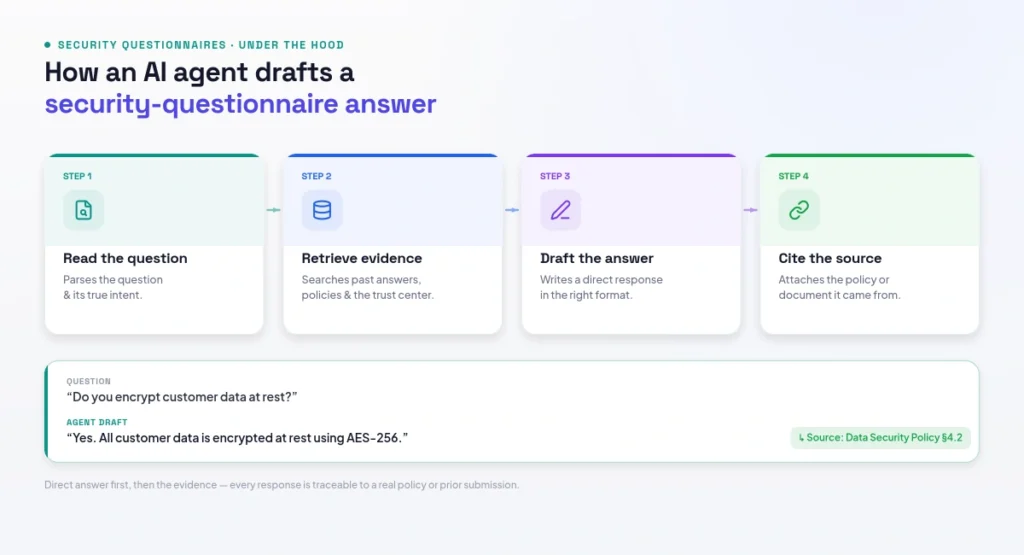
Figure 2: How an AI agent drafts a security-questionnaire answer
3. What AI Questionnaire Agents Do
An AI questionnaire agent ingests your security documentation — policies, past Q&As, audit evidence, wikis and shared drives — and uses that knowledge base to generate answers with cited sources for each question. The best tools handle every common format (Word docs, PDFs, and vendor portals), offer one-click auto-complete for portal questionnaires, and route questions to the right subject-matter experts for review through Slack, email or tools like Jira.
The capabilities that separate strong tools from weak ones are consistent: context-aware (semantic) AI rather than crude keyword matching, a single source of truth for answers, source citations on every response, broad framework coverage with reuse of standard questionnaires like CAIQ and SIG, file and portal support, and structured review workflows with auditability. Many tools also pair with a public Trust Center — a portal where buyers self-serve your security documentation, reducing the volume of inbound questionnaires in the first place. The strongest platforms are built for scale rather than bolting AI onto a legacy library, which is what lets them handle multi-framework complexity, integrations and access control without buckling.
4. The Best AI Agents for Security Questionnaires
The leading tools cluster by who they fit best. The table summarizes the top picks, followed by detail.
| Tool | Best for |
|---|---|
| Conveyor | Questionnaire-focused automation + trust center |
| Vanta | Teams already on Vanta’s compliance platform |
| Drata | Growth-stage vendors running multiple audits |
| Loopio | Consolidating RFPs + security responses |
| Responsive | Large teams needing workflow control |
| Arphie | Enterprises needing transparent AI + source attribution |
| SecurityPal | Regulated industries wanting human analyst review |
Conveyor is laser-focused on security questionnaires and frequently tops accuracy rankings — cited at 95%+ accuracy with a sub-0.01% hallucination rate — while combining a public trust center with one-click portal auto-completion and minimal knowledge-base upkeep. Vanta and Drata shine for teams already on their compliance platforms, generating audit-ready answers anchored to live SOC 2 and ISO 27001 controls and evidence. For RFP-style consolidation, Loopio offers a mature, governed content library (with 1,500+ customers and 10+ years in market), and Responsive serves large teams needing process control across many contributors.
A few specialists round out the field. Arphie positions itself as transparent, AI-first, with confidence scoring and source attribution on every answer — built for enterprise teams (500+ employees) that need to trust each response. SecurityPal adds certified human analyst oversight for regulated industries, and Sprinto bundles questionnaire automation with a live trust center for growing SaaS, fintech and healthtech firms. For budget-conscious teams, 1up.ai and purpose-built newcomers offer fast setup, while UpGuard and SafeBase lean on trust portals to deflect questionnaires entirely.
The practical lesson from this lineup is that there’s no single “best” tool — the right pick depends on where your pain actually lives. If your problem is sheer volume of standalone questionnaires, a focused tool like Conveyor or a fast newcomer wins. If it’s that your answers drift out of sync with your real controls, a compliance-platform module from Vanta or Drata keeps them anchored to live evidence. If it’s coordinating dozens of contributors across RFPs and security reviews at once, an enterprise workflow platform like Loopio or Responsive earns its higher price. Diagnosing your bottleneck first — volume, accuracy, or coordination — will point you to the right category far faster than comparing feature checklists in the abstract.
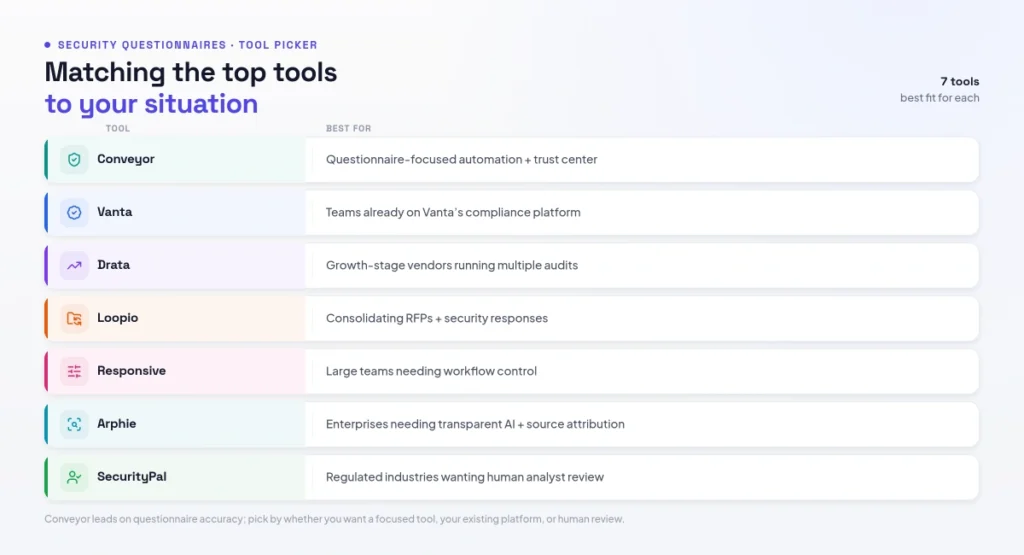
Figure 3: Matching the top tools to your situation
5. Pricing: What to Expect
Pricing spans a wide range depending on scale and model. Budget tools like 1up.ai start around $250/month for basic automation. Mid-market platforms such as AutoRFP.ai run roughly $899–$1,299/month, while Conveyor uses predictable credit-based pricing at about $9,600/year. At the enterprise end, Loopio‘s Plus tier starts around $24,000/year for 10 users, and other enterprise platforms reach $24,000+ annually.
For teams already paying for a compliance platform, Vanta and Drata questionnaire modules can be the most cost-effective route, since they leverage compliance work you’re already doing. The right way to compare isn’t the headline price but the total value: how much SME time the tool saves, how accurate its drafts are (fewer revisions), and whether a bundled trust center reduces your questionnaire volume. A tool that costs more but cuts response time and deflects half your inbound requests can easily pay for itself in faster deal cycles.
It also helps to weigh the cost against the alternative. A single complex questionnaire can consume a day or more of a security engineer’s time, and at fully loaded salaries that adds up fast across dozens of reviews a quarter — to say nothing of the revenue at risk when a slow response delays a deal. Viewed that way, even an enterprise platform near $24,000 a year is modest if it reclaims hundreds of expert hours and accelerates your sales cycle. The teams that get the most value treat questionnaire automation as a revenue enabler, not just a compliance cost, and budget for it accordingly.
| 💡 Pro Tip If security reviews are slowing your sales cycle, pair a questionnaire agent with a public Trust Center. The trust center lets buyers self-serve your SOC 2 report, policies and certifications, which deflects many questionnaires before they’re ever sent — and the agent handles the ones that still come through. This two-layer approach reduces volume and turnaround at the same time, which is why several leading tools now offer both. |
6. How to Choose the Right Tool
Match the tool to your situation. If you’re already on a compliance platform like Vanta or Drata, start with its built-in questionnaire module. If security reviews are a sales-cycle bottleneck, choose Conveyor for its questionnaire focus and trust center. If you’re consolidating RFPs and security responses, Loopio or Responsive fit. If you operate in a regulated industry and want a human safety net, SecurityPal’s analyst review helps, and if AI transparency is paramount, Arphie’s per-answer source attribution stands out.
Beyond fit, evaluate the features that determine real-world quality: context-aware semantic AI (not keyword matching), source citations and confidence scoring, framework coverage with CAIQ/SIG reuse, file and portal support, SME collaboration workflows, and auditability. Be wary of tools that simply layer AI onto a legacy content library and demand heavy manual upkeep — multi-framework complexity, integrations and access control are manageable only on platforms genuinely built for scale. Choosing the right underlying model matters too; see our best AI models comparison, and for the broader toolkit, our guide to the best agentic AI tools.
7. Loopio Security Questionnaire AI Agent Review
Loopio is the established name in this category — a legacy RFP-response leader that has layered AI onto a mature content-library workflow. Its security questionnaire agent works in three steps: it detects questions in an uploaded document, suggests best-matched answers from your pre-approved library, and exports responses back into the original format. The Project Workspace handles collaboration — role-based access, SME assignments, and real-time notifications across sales and security teams — and content review tools flag outdated answers after each project.
Where Loopio shines is governance: if your organization needs every answer traceable to an approved source, with clear ownership and review cycles, the library model is exactly right. Pricing is also unusually transparent for this category, at roughly $20,000/year for 10 seats.
The honest limitations: Loopio’s AI is a matching engine, not a generative one. Verified users report that its “Magic” auto-fill misses precise answers, and complex questionnaire formats often need manual import — a real friction point when a customer sends a 300-question multi-tab spreadsheet. The library model also demands upkeep: without someone owning content maintenance, match quality degrades and teams drift back to manual work.
Loopio fits best when security questionnaires are part of a broader RFP/DDQ workload you want in one governed system — less so when your volume is purely security questionnaires and automation speed matters more than library governance.
8. Best Practices for Accurate Responses
Even the best agent is only as good as its inputs and oversight. Start by cleaning your source content — outdated or conflicting policies produce wrong answers — and maintain a centralized, governed content library as your single source of truth. Define ownership so the right experts approve answers in their domain, and integrate the agent with your core systems so it draws on live, accurate evidence rather than stale documents.
The most important rule: review, don’t rewrite, and never auto-submit. Add a mandatory human QA loop before any questionnaire goes back to the buyer — the agent drafts, an expert verifies and approves. Because these answers are security commitments that buyers rely on, an inaccurate response is a trust and liability problem, not just an error. The discipline mirrors other high-stakes agent use cases like the AI agents for cross-border loan processing and voice systems in our best AI phone call agent guide: automate the heavy lifting, but keep a human accountable for what’s sent. Done this way, questionnaire agents turn a multi-day chore into a same-day task without sacrificing accuracy — a clear win for the broader AI tools for business stack.
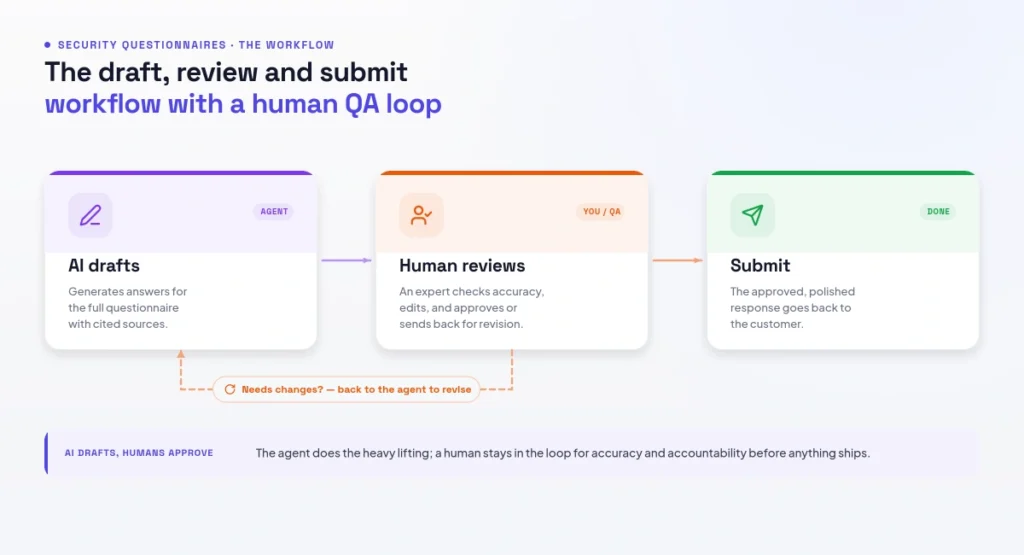
Figure 4: The draft, review and submit workflow with a human QA loop
| ⚠️ Important Never let an AI agent auto-submit security-questionnaire answers without human review. These responses are formal representations of your security posture that buyers rely on contractually — an inaccurate or hallucinated answer can create real legal and trust liability. Always keep a subject-matter expert in the loop to verify and approve every answer before it’s sent. |
9. Questions to Ask in the Demo (That Vendors Hope You Won’t)
- “Run our ugliest real questionnaire, live.” Bring a multi-tab Excel monster with merged cells. Every tool demos beautifully on clean formats; the differences show on the bespoke 40%.
- “What exactly happens when the AI isn’t confident?” You want confidence scores per answer and automatic SME routing — not silent best-guesses.
- “Show me the source citation for that answer.” If an answer can’t be traced to a specific document, you can’t defend it in an audit.
- “What does accuracy look like in month 6 if nobody maintains the library?” Library-based tools quietly degrade; generative tools claim they don’t. Make them prove it.
- “What’s the ALL-IN price at our real volume?” Credit- and volume-based pricing looks cheap at demo scale. Get the number at 3× your current load.
- “Can it auto-complete portal-based questionnaires, or only files?” Portals are where copy-paste hell lives.
- “Is our data used to train models shared with other customers?” For a security tool, the vendor’s own data handling is the first test.
- “What’s the exit path?” Ask how you export your full answer library in a usable format. Lock-in via un-exportable content is this category’s quiet trap.
10. Frequently Asked Questions
What are the best AI agents for security questionnaires?
Top tools include Conveyor (questionnaire-focused with a trust center), Vanta and Drata (for teams already on their compliance platforms), Loopio and Responsive (enterprise workflow), Arphie (transparent AI with source attribution), and SecurityPal (human analyst review). The best choice depends on your scale, whether you use a compliance platform, and how regulated your industry is.
How do AI security questionnaire tools work?
They ingest your security documentation — policies, past answers, audit evidence and wikis — and use AI to generate cited answers for each question, handling Word, PDF and portal formats. Many offer one-click auto-complete for portals and route questions to subject-matter experts for review. The agent drafts; a human verifies and approves before submission.
How accurate are AI questionnaire agents?
The best tools are highly accurate when fed clean source content — Conveyor, for example, is cited at over 95% accuracy with a sub-0.01% hallucination rate, and tools like Arphie provide confidence scoring and source attribution. Accuracy still depends on a well-maintained content library, so a human QA review before submission remains essential.
How much do security questionnaire automation tools cost?
Pricing ranges widely: budget tools like 1up.ai start around $250/month, mid-market platforms such as AutoRFP.ai run roughly $899–$1,299/month, Conveyor uses credit-based pricing around $9,600/year, and enterprise platforms like Loopio start near $24,000/year for 10 users. Teams already on Vanta or Drata can use built-in modules cost-effectively.
What is a Trust Center and do I need one?
A Trust Center is a public portal where buyers can self-serve your security documentation — SOC 2 reports, policies, certifications — without sending a questionnaire. It deflects many requests before they arrive, reducing inbound volume. Tools like Conveyor, SafeBase and UpGuard offer one, often paired with questionnaire automation for the requests that still come through.
Can AI replace humans for security questionnaires?
No — and it shouldn’t. AI agents draft answers far faster than humans, but security questionnaire responses are formal representations of your security posture that buyers rely on. A subject-matter expert must review and approve every answer before submission. The right model is AI drafting plus human verification, not full automation.
Which tool is best for teams already using Vanta or Drata?
If you’re already on Vanta or Drata for SOC 2 or ISO 27001 compliance, their built-in questionnaire modules are usually the best starting point, since they generate audit-ready answers anchored directly to your live controls and evidence. This leverages compliance work you’re already doing and keeps everything in one platform.
What features matter most in a questionnaire agent?
Prioritize context-aware semantic AI (not keyword matching), source citations and confidence scoring, a single governed content library, broad framework coverage with CAIQ/SIG reuse, file and portal support, SME collaboration workflows, and auditability. Avoid tools that bolt AI onto legacy libraries and demand heavy manual upkeep, especially if you run multiple frameworks.
11. Conclusion & Key Takeaways
Security questionnaires are a deal-slowing chore, and AI agents have become the practical fix — drafting cited answers from your documentation across every format and turning a multi-day task into a same-day one. Conveyor leads for questionnaire-focused automation with a trust center, Vanta and Drata fit teams on their compliance platforms, Loopio and Responsive serve enterprise workflows, and Arphie and SecurityPal add transparency and human review. The keys to success are a clean, centralized content library and a mandatory human QA step — because these answers are security commitments, never auto-submit them. To go deeper, see our pillar on the best AI agent tools and the guide to agentic AI applications.
- AI agents draft cited answers to security questionnaires from your documentation, across all common formats.
- Top picks: Conveyor, Vanta, Drata, Loopio, Responsive, Arphie, SecurityPal.
- Best tools hit 95%+ accuracy with very low hallucination rates, cutting response time from days to hours.
- Pricing ranges from ~$250/month to $24,000+/year; compliance-platform modules can be most cost-effective.
- Maintain a clean content library and always keep a human QA review — never auto-submit.
Security questionnaires don’t have to be the thing that stalls your deals. With the right AI agent feeding from a clean knowledge base — and a human signing off before submission — you can answer accurately in hours instead of days, and keep your sales cycle moving.

1 Comment
Pingback: 15 Best Agentic AI Tools & Platforms for Autonomous Agents 2026