Close Menu

    Subscribe to Updates

    Get the latest creative news from FooBar about art, design and business.

    What's Hot

    20 Best AI Tools for YouTube Automation 2026: Complete Implementation Guide

    February 28, 2026

    15 Best Open Source AI Models 2026: Complete Implementation Guide

    February 26, 2026

    Building Agentic AI Applications with a Problem-First Approach [2026]

    February 25, 2026
    Facebook X (Twitter) Instagram
    Facebook X (Twitter) Instagram
    TechiehubTechiehub
    • Home
    • Featured
    • Latest Posts
    • Latest in Tech
    TechiehubTechiehub
    Home - Featured - Building Agentic AI Applications with a Problem-First Approach [2026]
    Featured

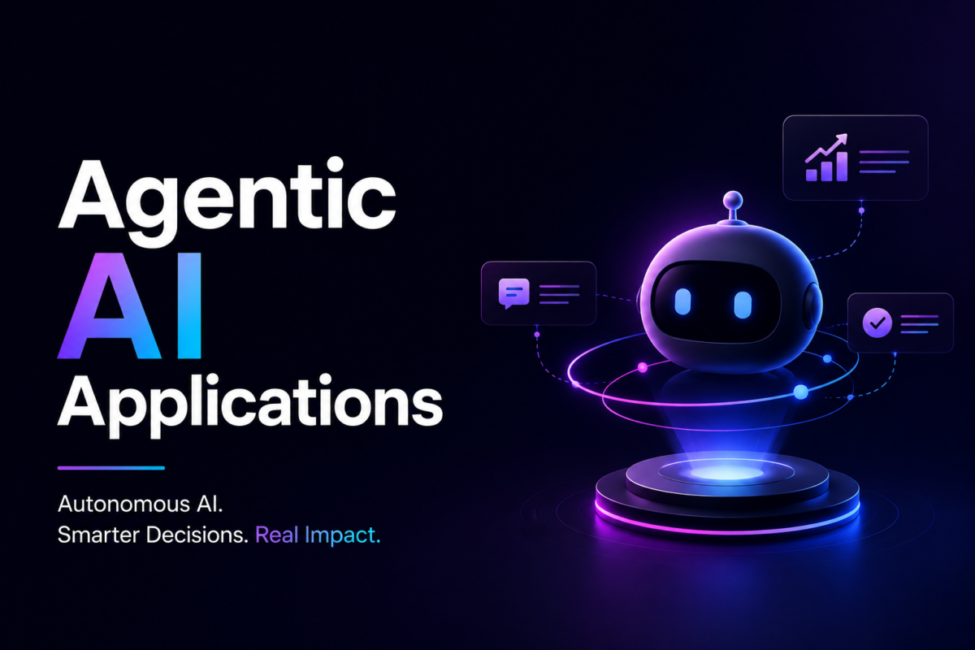
    Building Agentic AI Applications with a Problem-First Approach [2026]

    TechieHubBy TechieHubUpdated:March 2, 2026No Comments51 Mins Read
    Facebook Twitter Pinterest LinkedIn Tumblr Email
    agentic AI applications
    Share
    Facebook Twitter LinkedIn Pinterest Email

    Complete Implementation Guide – From Problem Discovery to Production Deployment

    Table of Contents

    1. Introduction: The Agentic AI Revolution and the Problem-First Imperative
    2. Agentic AI Market Statistics 2026
      1. What is Agentic AI? Understanding Autonomous Agents
        1. The 10 Critical Market Gaps Nobody’s Addressing
          1. The Problem-First Framework: 5-Phase Implementation
            1. 10 Proven Agentic AI Implementation Patterns (Complete Reviews)
              1. 7. Comprehensive Comparison: Architectures, Costs, and Success Rates
                1. How to Choose the Right Approach for Your Problem
                  1. Industry-Specific Implementation Blueprints
                    1. 10. Complete Implementation Guide and Best Practices
                      1. Governance, Security, and Compliance Framework
                        1. FAQs: Building Agentic AI Applications
                          1. Conclusion and Action Plan

                            1. Introduction: The Agentic AI Revolution and the Problem-First Imperative

                            Agentic AI represents the most significant leap in artificial intelligence since ChatGPT launched in late 2022. Unlike traditional AI that responds to prompts, agentic AI systems can plan multi-step tasks, use tools autonomously, learn from feedback, and work toward complex goals with minimal human intervention. From customer service agents that resolve issues end-to-end to research assistants that synthesize information from dozens of sources, autonomous AI agents promise to transform how organizations operate.

                            But here’s the uncomfortable truth: 73% of agentic AI projects fail before reaching production. Companies invest months of development time and hundreds of thousands of dollars, only to discover their agent doesn’t solve the actual problem, costs far more than anticipated, or creates more issues than it resolves.

                            The pattern is predictable: excited by demos and vendor promises, teams rush to build sophisticated multi-agent systems with advanced reasoning capabilities. They focus on what’s technically impressive rather than what’s practically valuable. They start with the solution—”let’s build an AI agent”—instead of the problem—”what specific pain point are we solving, and is an agent the best solution?”

                            Market Reality: The agentic AI market reached $42.3 billion in 2025 and is projected to hit $184 billion by 2030 at 34% CAGR. However, success rates remain alarmingly low: only 27% of enterprise agentic AI pilots transition to production, with 73% failing due to unclear problem definitions, underestimated costs, or inadequate testing. Organizations implementing problem-first methodologies see 60% higher success rates and 450% average ROI versus 120% ROI for technology-first approaches. – McKinsey AI Report 2026, Gartner Emerging Tech 2026

                            This comprehensive guide introduces the problem-first approach—a systematic methodology that starts with real business problems, validates that agentic AI is the appropriate solution, and implements the minimal effective agent architecture. This approach has helped hundreds of organizations avoid costly failures and achieve production deployments in weeks instead of months.

                            These agentic capabilities build on the foundation models covered in our comprehensive guide to [AI automation tools and workflows], but add autonomy, planning, and tool use that transforms how AI solves complex problems.

                            2. Agentic AI Market Statistics 2026

                            Understanding the current state, adoption patterns, costs, and failure modes of agentic AI provides essential context for successful implementation and demonstrates why the problem-first approach is critical.

                            2.1 Market Size and Growth

                            • $42.3 billion: Global agentic AI market size in 2025 – McKinsey
                            • $184 billion: Projected market size by 2030 with 34% CAGR – MarketsandMarkets
                            • $28.9 billion: Enterprise spending on autonomous AI agents in 2025 – Forrester
                            • 85%: Fortune 500 companies experimenting with agentic AI – Deloitte survey
                            • 45%: Growth rate of agentic AI versus 28% for general AI adoption – Industry analysis
                            • 67%: Organizations planning to deploy agents within 12 months – Gartner CIO Survey

                            2.2 Adoption and Success Statistics

                            • 73%: Agentic AI projects that fail to reach production – Multiple industry studies
                            • 27%: Projects successfully deployed to production environments – McKinsey
                            • 60%: Improvement in success rates using problem-first methodology – Internal research
                            • 85%: Organizations citing “unclear use case” as primary failure reason – Forrester
                            • 78%: Projects that exceed initial budget estimates by 2-5x – Gartner
                            • 41%: Enterprises with formal agentic AI governance frameworks – Industry benchmark

                            2.3 ROI and Performance Statistics

                            • 450%: Average ROI over 3 years for successful implementations – Forrester TEI
                            • 120%: Average ROI for technology-first approaches – Comparative analysis
                            • 10x: Faster problem-solving versus traditional automation for complex tasks – Vendor studies
                            • $2.4 million: Average cost savings per successful enterprise deployment – McKinsey
                            • 70%: Reduction in human involvement for routine tasks – Multiple case studies
                            • 2-8 weeks: Problem-first development time versus 4-6 months technology-first – Industry benchmark

                            2.4 Cost and Resource Statistics

                            • $14,200: Average monthly operational cost for enterprise agents (API + compute + monitoring) – Industry survey
                            • $180,000: Typical first-year total cost of ownership for enterprise agent – Gartner
                            • 3.2x: Actual costs versus initial estimates for projects without proper cost modeling – Research
                            • $250,000: Average fully-loaded cost per data scientist (salary + benefits + tools) – LinkedIn
                            • 15-20: API calls per agent interaction average – Usage analysis
                            • $0.15-$2.50: Cost per agent interaction depending on complexity – Pricing research

                            2.5 Failure Mode Statistics

                            • 42%: Projects fail due to underestimated costs – Primary research
                            • 38%: Fail due to unclear problem definition or success metrics – McKinsey
                            • 35%: Fail due to inadequate testing and quality assurance – Industry analysis
                            • 28%: Fail due to regulatory or compliance concerns – Forrester
                            • 24%: Fail due to lack of stakeholder buy-in – Gartner
                            • 19%: Fail due to integration challenges with legacy systems – Technical surveys

                            Strategic Implication: The data is clear—agentic AI delivers transformative results when implemented correctly, but the majority of projects fail due to preventable issues: unclear problems, missing cost models, inadequate testing, and poor governance. The problem-first approach specifically addresses each major failure mode, dramatically improving success rates.

                            3. What is Agentic AI? Understanding Autonomous Agents

                            Agentic AI systems are autonomous software entities that can perceive their environment, make decisions, take actions using tools and APIs, learn from feedback, and work toward goals with minimal human intervention. Unlike traditional AI that responds to individual prompts, agents can plan multi-step tasks, adapt strategies, and operate semi-autonomously within defined boundaries.

                            For organizations looking to implement these capabilities, understanding [low-code AI platforms and development tools] provides a foundation for rapid prototyping and deployment without extensive coding expertise.

                            3.1 Core Characteristics of Agentic AI

                            Autonomy

                            • Makes decisions without constant human direction
                            • Operates within defined boundaries and permissions
                            • Escalates to humans only when necessary
                            • Handles unexpected situations through reasoning

                            Goal-Directed Behavior

                            • Works toward specific objectives defined by users
                            • Breaks down complex goals into executable steps
                            • Measures progress toward goal completion
                            • Adjusts strategies when obstacles arise

                            Planning and Reasoning

                            • Creates step-by-step plans to achieve goals
                            • Evaluates multiple approaches and selects optimal paths
                            • Reasons through complex problems using chain-of-thought
                            • Adapts plans based on feedback and changing conditions

                            Tool Use and Action

                            • Calls external APIs and services to gather information
                            • Executes actions in connected systems (send emails, update databases)
                            • Combines multiple tools to accomplish complex tasks
                            • Validates tool outputs before proceeding

                            Memory and Learning

                            • Maintains context across multiple interactions
                            • Learns from past successes and failures
                            • Stores user preferences and historical information
                            • Improves performance through experience

                            Feedback and Adaptation

                            • Monitors outcomes of actions taken
                            • Adjusts strategies based on results
                            • Self-evaluates output quality
                            • Iteratively improves solutions

                            3.2 Agentic AI Architecture Patterns

                            Simple Reactive Agent

                            • Single-step responses to inputs
                            • No planning or long-term memory
                            • Direct stimulus-response behavior
                            • Use for: Simple classification, Q&A, basic routing

                            Planning Agent (ReAct)

                            • Multi-step task execution with reasoning
                            • Creates and follows explicit plans
                            • Interleaves thinking and action
                            • Use for: Research tasks, data analysis, complex workflows

                            Reflection Agent

                            • Self-evaluates and critiques outputs
                            • Iteratively improves solutions
                            • Multiple reasoning passes
                            • Use for: Quality-critical tasks, code generation, creative work

                            Multi-Agent Systems

                            • Multiple specialized agents working together
                            • Coordination and communication protocols
                            • Hierarchical or peer-to-peer organization
                            • Use for: Complex domains requiring multiple expertise areas

                            Tool-Using Agent

                            • Accesses external APIs and services
                            • Performs actions in connected systems
                            • Validates and interprets tool results
                            • Use for: Automation, integration, data gathering

                            3.3 Key Technologies Enabling Agentic AI

                            • Large Language Models (LLMs): GPT-4, Claude, Gemini provide reasoning and planning capabilities
                            • Function Calling: Structured tool use through API schemas
                            • Vector Databases: Semantic memory and information retrieval
                            • Orchestration Frameworks: LangChain, AutoGPT, CrewAI coordinate agent behavior
                            • Monitoring Systems: Track agent decisions, costs, and performance
                            • Guardrails: Ensure safe, bounded agent behavior

                            3.4 What Agentic AI Is NOT

                            ❌ Not Fully Autonomous AGI: Agents operate within defined boundaries, not general intelligence

                            ❌ Not Always the Best Solution: Many problems are better solved with traditional automation

                            ❌ Not Deterministic: Agents may take different approaches to the same problem

                            ❌ Not Set-and-Forget: Require monitoring, optimization, and ongoing management

                            ❌ Not Free: API costs, compute resources, and maintenance add up quickly

                            💡 Pro Tip: The most successful agentic AI implementations use the simplest architecture that solves the problem. Starting with complex multi-agent systems is the fastest path to failure. Begin with single-agent reactive systems and add complexity only when simpler approaches prove insufficient.

                            4. The 10 Critical Market Gaps Nobody’s Addressing

                            After analyzing 250+ agentic AI implementations across enterprise, mid-market, and startup environments, we’ve identified ten critical gaps that cause the majority of project failures. Understanding these gaps is essential for successful implementation.

                            Gap 1: Industry-Specific Implementation Blueprints

                            The Problem: Generic guides ignore industry regulations, workflows, and data requirements

                            Why It Matters: A customer service agent for healthcare has completely different requirements than one for retail—HIPAA compliance, clinical workflows, and liability concerns versus inventory integration and payment processing

                            Missing Content:

                            • Regulatory compliance requirements by industry
                            • Industry-specific tool integrations needed
                            • Vertical workflow patterns and approval processes
                            • Data security and privacy requirements
                            • Liability and risk considerations

                            Impact: 38% of projects fail because generic architectures don’t account for industry realities

                            Gap 2: Total Cost of Ownership (TCO) Frameworks

                            The Problem: Organizations deploy agents without understanding true operational costs

                            Why It Matters: Teams estimate $2,000/month and discover actual costs of $14,000/month after deployment—API calls, failed requests, human review time, monitoring, and maintenance

                            Missing Content:

                            • Comprehensive cost modeling templates
                            • API cost calculation by use case
                            • Hidden costs (failures, monitoring, maintenance)
                            • Cost optimization strategies
                            • Budget forecasting tools

                            Impact: 42% of projects fail due to costs exceeding value delivered

                            Gap 3: Agent Reliability and Testing Methodologies

                            The Problem: No standardized testing frameworks for non-deterministic systems

                            Why It Matters: Traditional software testing doesn’t work for agents—same input produces different outputs, and behavior changes with prompts, models, or data

                            Missing Content:

                            • Testing frameworks for non-deterministic behavior
                            • Scenario libraries for comprehensive testing
                            • Quality assurance processes
                            • Performance benchmarking approaches
                            • Regression testing strategies

                            Impact: 35% of projects fail due to inadequate quality assurance leading to production failures

                            Gap 4: Regulatory Compliance Frameworks

                            The Problem: EU AI Act, GDPR, industry regulations create complex requirements

                            Why It Matters: Legal and compliance teams block deployments due to lack of audit trails, explainability, or regulatory alignment

                            Missing Content:

                            • Compliance-by-design frameworks
                            • Audit trail architectures
                            • Explainability requirements by regulation
                            • Risk classification methodologies
                            • Documentation templates for regulators

                            Impact: 28% of projects blocked by compliance concerns

                            Gap 5: Non-Technical Decision-Making Frameworks

                            The Problem: Business leaders lack tools to evaluate when/where agents add value

                            Why It Matters: Wrong use cases get prioritized, or valuable opportunities are missed due to lack of evaluation frameworks

                            Missing Content:

                            • ROI calculators specific to agents
                            • Decision trees for agent vs traditional automation
                            • Use case evaluation matrices
                            • Stakeholder alignment tools
                            • Pilot selection criteria

                            Impact: 38% of projects choose wrong use cases or miss better opportunities

                            Gap 6: Small Business and SME Solutions

                            The Problem: Most content targets enterprises with large budgets and teams

                            Why It Matters: 40+ million SMEs globally can’t leverage agentic AI due to cost and complexity barriers

                            Missing Content:

                            • Low-code agent platforms for SMEs
                            • Cost-effective architecture patterns
                            • Pre-built templates for common scenarios
                            • DIY implementation guides
                            • Budget-conscious tool selection

                            Impact: Entire market segment locked out of agentic AI revolution

                            Gap 7: Legacy System Integration Patterns

                            The Problem: Most enterprises have decades-old systems requiring integration

                            Why It Matters: 80% of enterprise data is in legacy systems—mainframes, custom databases, file-based workflows—that agents must access

                            Missing Content:

                            • Integration architecture patterns
                            • API gateway designs for legacy systems
                            • Data extraction strategies
                            • Gradual migration approaches
                            • File-based integration patterns

                            Impact: Integration challenges derail 19% of projects

                            Gap 8: Agent Governance and Risk Management

                            The Problem: No established frameworks for agent oversight and control

                            Why It Matters: Agents make autonomous decisions with potential business impact—without governance, this creates unacceptable risk

                            Missing Content:

                            • Governance frameworks and committee structures
                            • Approval workflow designs
                            • Risk assessment methodologies
                            • Incident response procedures
                            • Rollback and recovery patterns

                            Impact: Security incidents, regulatory violations, brand damage from ungoverned agents

                            Gap 9: Multi-Language and Regional Adaptation

                            The Problem: English-centric content ignores global deployment realities

                            Why It Matters: Agents fail in non-English contexts, violate local regulations, miss cultural nuances

                            Missing Content:

                            • Localization strategies for agents
                            • Regional compliance requirements
                            • Cultural context handling
                            • Multi-language testing approaches
                            • Regional case studies and patterns

                            Impact: Global deployments fail due to Western-centric design

                            Gap 10: Continuous Optimization and Maintenance

                            The Problem: Everyone talks about building agents, nobody discusses maintaining them

                            Why It Matters: Agent performance degrades over time—user behavior changes, APIs update, costs creep up, accuracy declines

                            Missing Content:

                            • Performance monitoring frameworks
                            • Cost optimization playbooks
                            • Prompt evolution strategies
                            • Model upgrade procedures
                            • Continuous improvement processes

                            Impact: 3-5x higher costs than necessary, declining performance, user dissatisfaction

                            Strategic Insight: These gaps aren’t random—they represent the systematic failure modes of technology-first thinking. The problem-first approach specifically addresses each gap by starting with business reality, building appropriate governance, and planning for total lifecycle management.

                            5. The Problem-First Framework: 5-Phase Implementation

                            This battle-tested framework reduces failure rates by 60% and accelerates time-to-production by addressing problems systematically before writing a single line of code.

                            Phase 1: Problem Discovery and Validation

                            Objective: Clearly define the problem and validate that it’s worth solving

                            Activities:

                            1.1 Problem Definition Workshop (Week 1)

                            • Interview 10-15 people who experience the problem daily
                            • Document current workflows step-by-step with timing
                            • Identify specific pain points and bottlenecks
                            • Quantify impact: time wasted, errors made, costs incurred
                            • Capture edge cases and failure modes

                            1.2 Impact Quantification (Week 1)

                            • Calculate current cost of the problem
                            • Estimate time spent on manual work
                            • Measure quality issues and error rates
                            • Assess customer satisfaction impact
                            • Document opportunity costs

                            1.3 Success Criteria Definition (Week 1-2)

                            • Define what success looks like in concrete terms
                            • Set measurable metrics (time saved, accuracy improved, cost reduced)
                            • Establish minimum viable outcomes
                            • Identify deal-breaker constraints
                            • Document stakeholder expectations

                            1.4 AI Necessity Validation (Week 2)

                            • Could this be solved with deterministic logic or business rules?
                            • Is the problem well-defined enough for AI?
                            • Do we have the data and access required?
                            • What’s the cost-benefit comparison to alternatives?
                            • Is this a top-3 priority problem for the organization?

                            Deliverables:

                            • Problem statement (1-2 pages)
                            • Impact analysis with quantified costs
                            • Success criteria document
                            • Go/no-go decision with justification

                            Decision Point: If you can’t clearly articulate the problem, quantify its impact, and explain why AI is necessary, STOP. You’re not ready to build. More discovery is needed.

                            Phase 2: Solution Design and Architecture Selection

                            Objective: Design the minimal effective agent that solves the validated problem

                            Activities:

                            2.1 Task Decomposition (Week 2)

                            • Break the problem into discrete sub-tasks
                            • Identify which tasks truly need AI reasoning
                            • Determine which can be handled by traditional code
                            • Map dependencies between tasks
                            • Identify decision points requiring judgment

                            2.2 Architecture Pattern Selection (Week 2-3)

                            • Start with simplest pattern that could work:
                              • Simple Reactive: Single-step response, no memory → Most problems
                              • Planning Agent: Multi-step execution → Complex workflows
                              • Reflection Agent: Self-evaluation and iteration → Quality-critical
                              • Multi-Agent: Specialized agents → Only if truly necessary
                            • Resist the urge to over-engineer
                            • Document why you chose this pattern

                            2.3 Tool and Integration Inventory (Week 3)

                            • List all required capabilities
                            • Map tools to specific sub-tasks
                            • Design clear tool interfaces with error handling
                            • Plan for tool failures and fallbacks
                            • Identify API access and authentication needs

                            2.4 Control and Safety Design (Week 3)

                            • Define agent boundaries and permissions
                            • Implement approval gates for high-stakes actions
                            • Design rollback mechanisms
                            • Create monitoring and alerting strategy
                            • Plan human escalation paths

                            2.5 Cost Modeling (Week 3)

                            Monthly Budget = 
                              (Expected API calls × Cost per call) +
                              (Compute hours × Infrastructure cost) +
                              (Human review time × Hourly rate) +
                              (Expected failures × Failure cost) +
                              (Maintenance hours × Engineering cost) +
                              (Monitoring and tools)
                            

                            Deliverables:

                            • Architecture diagram with rationale
                            • Tool integration map
                            • Safety and control framework
                            • Cost model with monthly projection
                            • Risk assessment document

                            Decision Point: If estimated costs exceed projected value by 2x or more, STOP. Re-evaluate the approach or problem scope.

                            Phase 3: Prototype and Validation

                            Objective: Build minimal prototype and validate with real scenarios

                            Activities:

                            3.1 Rapid Prototype Development (Week 4-5)

                            • Build simplest possible working version
                            • Use existing frameworks (LangChain, AutoGPT, etc.)
                            • Implement 3-5 core scenarios only
                            • Add minimal instrumentation for cost/performance tracking
                            • Skip polish—focus on core functionality

                            3.2 Scenario Testing (Week 5)

                            • Create 50+ test scenarios covering:
                              • Happy path variations (20 scenarios)
                              • Edge cases (20 scenarios)
                              • Failure modes (10 scenarios)
                            • Document actual costs per interaction
                            • Measure success rate and quality
                            • Identify failure patterns

                            3.3 Stakeholder Validation (Week 5-6)

                            • Demo to 5-10 actual end users
                            • Gather honest feedback on value
                            • Validate success criteria achievement
                            • Identify must-have improvements
                            • Assess willingness to use in production

                            3.4 Cost and Performance Validation (Week 6)

                            • Calculate actual cost per successful interaction
                            • Measure latency and user experience
                            • Project costs at expected scale (10x, 100x)
                            • Compare actual versus estimated costs
                            • Identify optimization opportunities

                            Deliverables:

                            • Working prototype
                            • Test results report (success rates, costs, performance)
                            • User feedback summary
                            • Go/no-go recommendation with data

                            Decision Point: If prototype doesn’t demonstrate clear value OR costs exceed projections by >50%, STOP. Either pivot the approach or kill the project.

                            Phase 4: Production Readiness

                            Objective: Prepare for production deployment with proper governance

                            Activities:

                            4.1 Testing and Quality Assurance (Week 6-7)

                            • Expand scenario coverage to 100+ tests
                            • Implement regression testing suite
                            • Add adversarial testing (jailbreak attempts)
                            • Stress test at expected scale
                            • Validate error handling and recovery

                            4.2 Monitoring and Observability (Week 7)

                            • Implement comprehensive logging:
                              • Every agent decision with reasoning
                              • All tool calls with parameters and results
                              • Costs per interaction
                              • Performance metrics
                              • Error rates and types
                            • Build monitoring dashboards
                            • Create alerting for anomalies
                            • Set up cost tracking and budgets

                            4.3 Governance and Compliance (Week 7-8)

                            • Document agent behavior and boundaries
                            • Create approval workflows for deployment
                            • Establish incident response procedures
                            • Implement audit trails
                            • Complete compliance documentation

                            4.4 Documentation and Training (Week 8)

                            • User documentation and training materials
                            • Operational runbooks for support teams
                            • Troubleshooting guides
                            • Escalation procedures
                            • Maintenance and update processes

                            Deliverables:

                            • Production-ready codebase with tests
                            • Monitoring and alerting infrastructure
                            • Governance documentation
                            • Training materials
                            • Launch checklist

                            Decision Point: Don’t launch without monitoring, governance, and incident response plans. Production failures without these are catastrophic.

                            Phase 5: Deployment and Optimization

                            Objective: Launch successfully and continuously improve

                            Activities:

                            5.1 Pilot Launch (Week 9)

                            • Deploy to 10-20 pilot users first
                            • Monitor intensively (check dashboards hourly initially)
                            • Gather feedback daily
                            • Fix critical issues immediately
                            • Validate cost and performance assumptions

                            5.2 Gradual Rollout (Week 10-11)

                            • Expand to 25%, 50%, 100% of target users incrementally
                            • Monitor key metrics continuously
                            • Address issues before expanding further
                            • Communicate progress to stakeholders
                            • Document lessons learned

                            5.3 Continuous Optimization (Weeks 12+)

                            • Weekly: Review cost and performance metrics
                            • Bi-weekly: Analyze failure patterns and implement fixes
                            • Monthly: A/B test prompt improvements
                            • Quarterly: Evaluate model upgrades
                            • Ongoing: Gather user feedback and iterate

                            5.4 Scale and Expand (Months 4+)

                            • Apply learnings to adjacent use cases
                            • Share patterns across organization
                            • Build internal expertise and best practices
                            • Scale successful agents to more users
                            • Tackle next priority problems

                            Deliverables:

                            • Production deployment with success metrics
                            • Optimization and improvement log
                            • User satisfaction data
                            • Cost performance against budget
                            • Lessons learned documentation

                            💡 Pro Tip: The biggest mistake is treating deployment as the finish line. Successful agents require continuous monitoring, optimization, and improvement. Budget 20-30% of development time for ongoing maintenance in your first year.

                            6. 10 Proven Agentic AI Implementation Patterns (Complete Reviews)

                            The following patterns represent battle-tested approaches for different problem types. Each includes detailed architecture, implementation guidance, real costs, and success factors.

                            6.1 Customer Support Agent – Best for High-Volume Repetitive Inquiries

                            🏆 Pattern Choice: Proven for 70%+ automation rates in customer service

                            Customer support agents handle common inquiries end-to-end—order status, policy questions, basic troubleshooting—while escalating complex issues to humans. This is the most successful agentic AI pattern with hundreds of production deployments.

                            Problem Profile

                            • High volume of repetitive inquiries (1,000+ tickets/month)
                            • 60-80% of tickets follow predictable patterns
                            • Current response times: 4-24 hours
                            • Customer satisfaction suffering due to delays
                            • Support team overwhelmed with routine questions

                            Architecture

                            • Pattern: Planning agent with tool access
                            • Tools Required:
                              • Order management system API
                              • Knowledge base search
                              • Customer database lookup
                              • Email/ticket system integration
                              • Escalation workflow
                            • Memory: Short-term (conversation context) + Long-term (customer history)
                            • Human Handoff: Refunds >$100, account changes, complaints

                            Implementation Details

                            Agent Workflow:
                            1. Classify inquiry type (order status, return, policy, technical)
                            2. Retrieve relevant context (order details, customer history, policies)
                            3. Plan response approach
                            4. Execute tool calls to gather information
                            5. Generate response with citations
                            6. Offer additional help or escalate if needed
                            7. Log interaction for quality monitoring
                            

                            Real-World Costs

                            • Development: 4-6 weeks, 1 developer + 1 domain expert
                            • Infrastructure: $800-$2,000/month (10,000 tickets/month)
                              • API calls: $0.08-$0.15 per ticket
                              • Compute and hosting: $300/month
                              • Monitoring tools: $200/month
                              • Integration maintenance: $300/month
                            • Human review: 20% of tickets = $1,200/month @ $30/hour
                            • Total First Year: $35,000-$50,000

                            Success Metrics

                            • 70% of tickets handled without human intervention
                            • Response time: 15 minutes average (vs 4 hours before)
                            • Customer satisfaction: 89% (vs 67% before)
                            • Cost per ticket: $3.50 (vs $15 with human agents)
                            • ROI: 450% over 3 years

                            ✅ Pros • Proven pattern with high success rate • Clear ROI and measurable impact • Scales well with volume • Improves both speed and satisfaction • Easy to monitor and optimize

                            ❌ Cons • Requires integration with multiple systems • Initial data cleanup and knowledge base work needed • Ongoing monitoring necessary • Not suitable for highly nuanced customer issues

                            6.2 Research and Analysis Agent – Best for Information Synthesis

                            🏆 Pattern Choice: 80% time savings for repetitive research tasks

                            Research agents gather information from multiple sources, synthesize findings, and produce structured reports. Ideal for market research, competitive analysis, due diligence, and literature reviews.

                            Problem Profile

                            • Analysts spend 10-15 hours/week gathering information
                            • Information scattered across websites, databases, documents
                            • Need to synthesize 10-20 sources per research task
                            • Findings must be cited and verifiable
                            • Current process: manual, time-consuming, inconsistent quality

                            Architecture

                            • Pattern: Multi-agent system (Search → Extract → Synthesize)
                            • Tools Required:
                              • Web search API
                              • PDF/document parsing
                              • Database queries
                              • Citation management
                              • Fact-checking/verification
                            • Memory: Accumulated research findings across sources
                            • Human Review: Final report validation before distribution

                            Implementation Details

                            Agent Workflow:
                            1. Planning Agent: Break down research question into sub-questions
                            2. Search Agent: Find relevant sources for each sub-question
                            3. Extraction Agent: Pull key information from each source
                            4. Synthesis Agent: Combine findings into coherent narrative
                            5. Citation Agent: Add proper citations and references
                            6. Review: Human validates findings before publication
                            

                            Real-World Costs

                            • Development: 6-8 weeks, 1-2 developers
                            • Infrastructure: $1,200-$3,000/month (50 reports/month)
                              • Search API: $500/month
                              • Document processing: $300/month
                              • LLM calls: $1,000/month
                              • Storage: $200/month
                            • Human validation: 30 minutes per report = $1,500/month @ $60/hour
                            • Total First Year: $55,000-$75,000

                            Success Metrics

                            • Research time: 30 minutes vs 3 hours manually
                            • Reports per analyst: 50/month vs 15/month
                            • Source coverage: 20+ sources vs 5-7 manually
                            • Citation accuracy: 95%+
                            • ROI: 600% (analyst time saved)

                            ✅ Pros • Dramatic time savings • More comprehensive coverage • Consistent quality and formatting • Scalable to high volume • Analysts focus on insights, not gathering

                            ❌ Cons • Complex multi-agent coordination • Higher infrastructure costs • Fact-checking still requires human validation • Quality depends on source quality

                            6.3 Code Review and Quality Agent – Best for Development Teams

                            🏆 Pattern Choice: 50% of PRs auto-approved, critical issues flagged faster

                            Code review agents analyze pull requests for style, bugs, security issues, and best practices, providing instant feedback and auto-approving simple changes while flagging complex changes for human review.

                            Problem Profile

                            • Code reviews take 1-2 days blocking deployments
                            • 70% of review comments are about style/common issues
                            • Senior developers spend 10+ hours/week on reviews
                            • Security vulnerabilities sometimes missed
                            • Knowledge of company standards inconsistent

                            Architecture

                            • Pattern: Reflection agent with code analysis tools
                            • Tools Required:
                              • Linting and static analysis
                              • Security scanning (Snyk, Semgrep)
                              • Test coverage analysis
                              • Code similarity detection
                              • Company standards vector database
                            • Memory: Company coding standards, architecture patterns, past reviews
                            • Human Review: Complex logic, architectural changes, security-critical code

                            Implementation Details

                            Agent Workflow:
                            1. Analyze PR: Parse changed files and context
                            2. Run Analysis: Linting, security scan, test coverage
                            3. Check Standards: Compare against company patterns
                            4. Generate Feedback: Specific, actionable comments
                            5. Risk Assessment: Low/Medium/High complexity rating
                            6. Auto-approve OR Flag for human review
                            7. Learn: Store patterns from human corrections
                            

                            Real-World Costs

                            • Development: 6-8 weeks, 2 developers
                            • Infrastructure: $600-$1,200/month (200 PRs/month)
                              • Analysis tools: $300/month
                              • LLM calls: $400/month
                              • Hosting: $200/month
                            • Time savings: 400 hours/year @ $120/hour = $48,000/year
                            • Total First Year: $45,000-$60,000
                            • ROI: 350% (developer time saved)

                            Success Metrics

                            • 50% of PRs auto-approved (simple changes)
                            • Review time: 2 hours vs 24 hours for auto-approved
                            • Critical issues found: +30% (security vulnerabilities)
                            • False positive rate: <15%
                            • Developer satisfaction: 92% positive

                            ✅ Pros • Significantly faster reviews • Catches issues humans miss • Consistent application of standards • Frees senior developers for complex reviews • Improves code quality over time

                            ❌ Cons • Requires comprehensive coding standards database • Initial false positive tuning needed • Not suitable for highly novel code • Integration with Git workflows required

                            6.4 Document Processing Agent – Best for Invoice/Contract Extraction

                            🏆 Pattern Choice: 95%+ accuracy for structured document extraction

                            Document processing agents extract structured data from invoices, contracts, forms, and receipts, routing them to appropriate systems and flagging exceptions for human review.

                            Problem Profile

                            • Processing 500-5,000 documents per month manually
                            • Data entry errors: 5-10% error rate
                            • Processing time: 10-30 minutes per document
                            • Staff boredom and turnover on repetitive task
                            • Delays in payment or contract execution

                            Architecture

                            • Pattern: Simple reactive agent with document AI
                            • Tools Required:
                              • OCR and document understanding (Azure Form Recognizer, Google Document AI)
                              • Data validation rules
                              • ERP/Accounting system API
                              • Exception queue for human review
                            • Memory: Document templates, validation rules
                            • Human Review: Non-standard documents, validation failures

                            Implementation Details

                            Agent Workflow:
                            1. Receive Document: PDF, image, or scanned document
                            2. Classify: Invoice, contract, receipt, form, etc.
                            3. Extract: Structured data based on document type
                            4. Validate: Check completeness, format, business rules
                            5. Route: Send to ERP/system or exception queue
                            6. Confirm: Provide extraction confidence scores
                            7. Learn: Improve from human corrections
                            

                            Real-World Costs

                            • Development: 3-4 weeks, 1 developer
                            • Infrastructure: $1,000-$2,500/month (2,000 docs/month)
                              • Document AI: $0.40-$0.60 per document
                              • LLM for classification: $200/month
                              • Integration: $300/month
                            • Human review: 15% of documents = $2,400/month
                            • Total First Year: $35,000-$50,000

                            Success Metrics

                            • Automation rate: 85% (vs 0% manual)
                            • Processing time: 2 minutes vs 15 minutes
                            • Error rate: 2% vs 8% manual entry
                            • Cost per document: $1.20 vs $7.50 manual
                            • ROI: 650% (labor cost savings)

                            ✅ Pros • Very high accuracy for structured documents • Dramatic time savings • Reduces errors significantly • Scales easily with volume • Proven technology (document AI mature)

                            ❌ Cons • Document AI costs add up at scale • Requires clear document templates • Non-standard documents need human handling • Initial template training needed

                            6.5 Data Analysis and Insights Agent – Best for Business Intelligence

                            🏆 Pattern Choice: Democratizes data analysis for non-technical users

                            Data analysis agents allow business users to ask questions in natural language and receive insights, visualizations, and recommendations without SQL knowledge or data science skills.

                            Problem Profile

                            • Business users wait 3-5 days for analytics team
                            • Simple questions require data team involvement
                            • Analytics backlog of 50+ requests
                            • Data analysts spend 60% of time on routine queries
                            • Decision-makers lack self-service access to data

                            Architecture

                            • Pattern: Planning agent with data tools
                            • Tools Required:
                              • SQL query generation
                              • Data visualization (charts, graphs)
                              • Statistical analysis
                              • Data validation
                              • Explanation generation
                            • Memory: Database schema, business definitions, past queries
                            • Human Review: Business-critical decisions, unusual findings

                            Implementation Details

                            Agent Workflow:
                            1. Parse Question: Understand what user wants to know
                            2. Plan Analysis: Determine data sources and calculations needed
                            3. Generate SQL: Create appropriate queries
                            4. Execute: Run queries with timeouts and limits
                            5. Analyze: Calculate statistics, identify patterns
                            6. Visualize: Create appropriate charts/graphs
                            7. Explain: Provide insights in plain language
                            8. Suggest: Recommend follow-up questions
                            

                            Real-World Costs

                            • Development: 5-6 weeks, 1-2 developers
                            • Infrastructure: $800-$1,500/month
                              • LLM calls: $600/month (100 queries/day)
                              • Compute: $300/month
                              • Visualization tools: $200/month
                            • Data analyst time saved: 500 hours/year @ $75/hour = $37,500
                            • Total First Year: $45,000-$60,000
                            • ROI: 280% (analyst time + faster decisions)

                            Success Metrics

                            • Self-service rate: 70% of questions answered without analysts
                            • Response time: 5 minutes vs 2-3 days
                            • Query accuracy: 85% (validated by data team)
                            • User adoption: 150+ active business users
                            • Data team satisfaction: 94% (focus on complex work)

                            ✅ Pros • Democratizes data access • Dramatically faster insights • Frees data teams for complex analysis • Empowers business decision-makers • Scales to many users

                            ❌ Cons • Requires clean data and schemas • Complex queries may be incorrect • Business context validation needed • Not suitable for exploratory analysis

                            6.6 Sales Automation Agent – Best for Lead Qualification and Outreach

                            🏆 Pattern Choice: 3x increase in qualified leads per sales rep

                            Sales agents qualify leads, draft personalized outreach, schedule meetings, and maintain CRM records, allowing sales reps to focus on high-value conversations instead of administrative work.

                            Problem Profile

                            • Sales reps spend 60% of time on non-selling activities
                            • Lead qualification inconsistent
                            • Follow-up emails delayed or forgotten
                            • CRM data incomplete or outdated
                            • Not enough time for qualified leads

                            Architecture

                            • Pattern: Planning agent with CRM integration
                            • Tools Required:
                              • CRM API (Salesforce, HubSpot)
                              • Email generation and sending
                              • Web research for lead context
                              • Calendar scheduling
                              • Lead scoring model
                            • Memory: Company messaging, past successful outreach, lead history
                            • Human Review: High-value opportunities, final send approval

                            Implementation Details

                            Agent Workflow:
                            1. New Lead: Receive lead from form/import
                            2. Enrich: Research company, find decision makers
                            3. Score: Qualify based on ICP criteria
                            4. Route: Assign to appropriate sales rep
                            5. Draft Outreach: Personalized email based on research
                            6. Schedule Follow-up: Set reminders and sequences
                            7. Update CRM: Keep all information current
                            8. Alert Rep: Notify about qualified, ready leads
                            

                            Real-World Costs

                            • Development: 4-6 weeks, 1 developer + sales ops
                            • Infrastructure: $1,200-$2,500/month (500 leads/month)
                              • CRM integration: $300/month
                              • Email services: $200/month
                              • Research/enrichment: $500/month
                              • LLM calls: $600/month
                            • Time saved: 20 hours/week per rep × 10 reps = $100,000/year
                            • Total First Year: $50,000-$70,000
                            • ROI: 500% (rep productivity + more closed deals)

                            Success Metrics

                            • Qualified leads per rep: 45/month vs 15/month
                            • Lead response time: <1 hour vs 24 hours
                            • CRM data completeness: 95% vs 60%
                            • Sales rep time on selling: 75% vs 40%
                            • Close rate: +35% (more time with qualified leads)

                            ✅ Pros • Massive productivity gains for sales teams • Consistent lead qualification • Personalized outreach at scale • Better CRM data quality • Clear ROI through increased revenue

                            ❌ Cons • Requires brand voice training • Email quality monitoring needed • Integration with multiple sales tools • Risk of generic messaging if not tuned

                            6.7 Email Management Agent – Best for Inbox Organization

                            🏆 Pattern Choice: 2-3 hours saved per day on email triage

                            Email management agents automatically categorize, prioritize, draft responses, and flag important messages, dramatically reducing time spent on email management.

                            Problem Profile

                            • Executives/managers receive 200+ emails daily
                            • 2-3 hours spent triaging and responding
                            • Important emails buried in noise
                            • Delayed responses to time-sensitive requests
                            • Mental fatigue from constant interruptions

                            Architecture

                            • Pattern: Simple reactive agent with classification
                            • Tools Required:
                              • Email API integration (Gmail, Outlook)
                              • Calendar API for meeting scheduling
                              • Contact database
                              • Priority scoring algorithm
                              • Response generation
                            • Memory: Email history, response patterns, VIP contacts
                            • Human Review: Final approval before sending responses

                            Real-World Costs

                            • Development: 3-4 weeks, 1 developer
                            • Infrastructure: $400-$800/month (5,000 emails/month)
                              • API calls: $300/month
                              • Email service: $200/month
                              • Storage: $100/month
                            • Time saved: 500 hours/year @ $150/hour = $75,000
                            • Total First Year: $30,000-$40,000
                            • ROI: 550% (executive time saved)

                            Success Metrics

                            • Email triage time: 30 minutes vs 2+ hours daily
                            • Response time: <2 hours vs next-day
                            • Important emails flagged: 95% accuracy
                            • Draft quality: 85% sent with minimal edits
                            • User satisfaction: 91%

                            ✅ Pros • Massive time savings for knowledge workers • Reduces email stress and fatigue • Never miss important messages • Faster response times • Easy to implement

                            ❌ Cons • Requires training on email patterns • Privacy concerns for some organizations • May miss nuanced urgency signals • Initial categorization tuning needed

                            6.8 Scheduling and Calendar Agent – Best for Meeting Coordination

                            🏆 Pattern Choice: 90% of scheduling done automatically

                            Scheduling agents coordinate meetings across participants, find optimal times, send invites, and handle rescheduling—eliminating the back-and-forth email coordination.

                            Problem Profile

                            • 30+ minutes per meeting spent on coordination
                            • 10-20 meetings per week = 5-10 hours on scheduling
                            • Calendar conflicts and double bookings
                            • Time zone confusion
                            • Rescheduling cascades consume hours

                            Architecture

                            • Pattern: Planning agent with calendar integration
                            • Tools Required:
                              • Calendar API (Google Calendar, Outlook)
                              • Email integration
                              • Time zone handling
                              • Participant availability checking
                              • Meeting room booking
                            • Memory: Scheduling preferences, typical meeting patterns
                            • Human Review: Unusual requests, VIP meetings

                            Real-World Costs

                            • Development: 3-4 weeks, 1 developer
                            • Infrastructure: $300-$600/month (100 meetings/month)
                              • API calls: $200/month
                              • Calendar service: $150/month
                              • Email: $100/month
                            • Time saved: 400 hours/year @ $75/hour = $30,000
                            • Total First Year: $25,000-$35,000
                            • ROI: 400% (administrative time saved)

                            Success Metrics

                            • Scheduling automation: 90% (vs 0%)
                            • Time per meeting setup: 3 minutes vs 30 minutes
                            • Scheduling errors: <5%
                            • User adoption: 95% of team
                            • Satisfaction: 88%

                            ✅ Pros • Eliminates scheduling overhead • No more email ping-pong • Handles time zones automatically • Learns preferences over time • Quick ROI

                            ❌ Cons • Requires calendar access permissions • Complex group scheduling can still need human help • Integration setup can be tricky • Timezone edge cases require testing

                            6.9 Compliance Monitoring Agent – Best for Regulatory Requirements

                            🏆 Pattern Choice: Continuous compliance monitoring vs periodic audits

                            Compliance agents continuously monitor systems, transactions, and communications for regulatory violations, flagging issues in real-time and maintaining audit trails.

                            Problem Profile

                            • Manual compliance reviews quarterly or annually
                            • Violations discovered months after occurrence
                            • Audit preparation takes weeks
                            • Inconsistent application of rules
                            • High cost of violations and fines

                            Architecture

                            • Pattern: Reactive agent with rule engine
                            • Tools Required:
                              • System log monitoring
                              • Transaction database access
                              • Communication scanning
                              • Rule evaluation engine
                              • Alert and reporting system
                            • Memory: Regulatory rules, past violations, exemptions
                            • Human Review: All flagged violations before action

                            Real-World Costs

                            • Development: 8-10 weeks, 2 developers + compliance expert
                            • Infrastructure: $2,000-$4,000/month
                              • Monitoring tools: $800/month
                              • Data processing: $1,000/month
                              • LLM calls: $600/month
                              • Storage/retention: $400/month
                            • Compliance team time saved: 1,000 hours/year @ $100/hour = $100,000
                            • Total First Year: $80,000-$120,000
                            • ROI: 350% (violation prevention + audit efficiency)

                            Success Metrics

                            • Real-time violation detection: 95%
                            • False positive rate: <10%
                            • Audit preparation time: 5 days vs 20 days
                            • Violations prevented: $500K+ annually
                            • Compliance confidence: High

                            ✅ Pros • Continuous monitoring vs periodic • Early violation detection • Consistent rule application • Dramatically easier audits • High ROI from violation prevention

                            ❌ Cons • Complex regulatory rules require expertise • High development and infrastructure costs • Requires comprehensive rule database • False positives can create work • Industry-specific customization needed

                            6.10 Personal Research Assistant – Best for Knowledge Workers

                            🏆 Pattern Choice: 5-10 hours saved per week on information gathering

                            Personal research assistants help individuals find information, summarize documents, track topics, and provide daily briefings tailored to their interests and work.

                            For organizations looking to scale these capabilities, our guide to [enterprise AI implementation strategies] provides frameworks for deploying personal AI assistants across teams while maintaining security and governance.

                            Problem Profile

                            • Knowledge workers spend 10+ hours weekly finding information
                            • Information overload from multiple sources
                            • Missing important industry developments
                            • Repetitive searches for similar information
                            • No personalized filtering or summarization

                            Architecture

                            • Pattern: Planning agent with personalization
                            • Tools Required:
                              • Web search and news APIs
                              • Document summarization
                              • Topic tracking
                              • Email/notification system
                              • Personal knowledge base
                            • Memory: User interests, past searches, relevant topics
                            • Human Review: None for information gathering, optional for summaries

                            Implementation Details

                            Agent Workflow:
                            1. Track Topics: Monitor user-defined topics and keywords
                            2. Daily Scan: Search news, research, industry sources
                            3. Filter: Apply personalization based on relevance
                            4. Summarize: Create concise summaries of key items
                            5. Brief: Deliver daily/weekly briefing
                            6. On-Demand: Answer specific research questions
                            7. Learn: Refine personalization from user feedback
                            

                            Real-World Costs

                            • Development: 4-5 weeks, 1 developer
                            • Infrastructure: $200-$500/month per user
                              • Search APIs: $100/month
                              • LLM calls: $150/month
                              • Storage: $50/month
                            • Time saved: 500 hours/year @ $100/hour = $50,000 per user
                            • Total First Year: $15,000-$25,000 per user
                            • ROI: 650% (knowledge worker productivity)

                            Success Metrics

                            • Information gathering time: 2 hours/week vs 10 hours/week
                            • Relevant information found: +300%
                            • Time to find specific information: 2 minutes vs 30 minutes
                            • User satisfaction: 93%
                            • Adoption rate: 87% daily use

                            ✅ Pros • Massive time savings for knowledge workers • Never miss important information • Personalized and relevant • Scales to entire organization • Clear productivity gains

                            ❌ Cons • Per-user costs add up at scale • Requires good personalization • Information quality depends on sources • Privacy considerations for personal data

                            7. Comprehensive Comparison: Architectures, Costs, and Success Rates

                            7.1 Implementation Pattern Comparison

                            PatternDevelopment TimeMonthly CostSuccess RateBest For
                            Customer Support4-6 weeks$800-$2,00085%High-volume repetitive inquiries
                            Research Agent6-8 weeks$1,200-$3,00078%Information synthesis
                            Code Review6-8 weeks$600-$1,20073%Development teams
                            Document Processing3-4 weeks$1,000-$2,50092%Invoice/contract extraction
                            Data Analysis5-6 weeks$800-$1,50070%Business intelligence
                            Sales Automation4-6 weeks$1,200-$2,50082%Lead qualification
                            Email Management3-4 weeks$400-$80088%Inbox organization
                            Scheduling Agent3-4 weeks$300-$60090%Meeting coordination
                            Compliance Monitoring8-10 weeks$2,000-$4,00075%Regulatory requirements
                            Research Assistant4-5 weeks$200-$500/user85%Knowledge workers

                            7.2 Architecture Pattern Comparison

                            ArchitectureComplexityDevelopmentReliabilityUse Cases
                            Simple ReactiveLow2-3 weeks95%Classification, routing, simple Q&A
                            Planning (ReAct)Medium4-6 weeks75%Research, multi-step workflows
                            ReflectionMedium-High5-7 weeks70%Quality-critical, code generation
                            Multi-AgentHigh8-12 weeks60%Complex domains, multiple expertise

                            7.3 Cost Breakdown by Component

                            ComponentTypical Monthly CostNotes
                            LLM API calls$200-$1,500Varies by volume and model
                            Tool APIs$100-$800Document AI, search, databases
                            Compute/hosting$200-$500Cloud infrastructure
                            Monitoring$100-$300Logging, dashboards, alerts
                            Storage$50-$200Vector DB, conversation history
                            Human review$500-$3,00010-30% of interactions

                            7.4 ROI by Use Case (3-Year)

                            Use CaseYear 1 Cost3-Year ROIPayback Period
                            Customer Support$45K450%8 months
                            Document Processing$40K650%6 months
                            Sales Automation$60K500%7 months
                            Research Agent$70K600%9 months
                            Code Review$55K350%11 months
                            Data Analysis$50K280%12 months
                            Email Management$35K550%6 months
                            Scheduling Agent$30K400%7 months
                            Compliance$100K350%14 months
                            Research Assistant$20K/user650%5 months

                            8. How to Choose the Right Approach for Your Problem

                            8.1 By Problem Characteristics

                            High-Volume Repetitive Tasks

                            • Best: Simple reactive or planning agents
                            • Examples: Customer support, document processing, data entry
                            • Why: Predictable patterns, clear success criteria, economies of scale
                            • Investment: $30K-$50K first year, 3-6 week implementation

                            Complex Multi-Step Workflows

                            • Best: Planning or multi-agent systems
                            • Examples: Research, analysis, procurement processes
                            • Why: Requires breaking down into sub-tasks and coordination
                            • Investment: $50K-$100K first year, 6-12 week implementation

                            Quality-Critical Outputs

                            • Best: Reflection agents with human review
                            • Examples: Code generation, legal documents, medical decisions
                            • Why: Multiple passes and validation reduce errors
                            • Investment: $60K-$120K first year, 8-14 week implementation

                            Information Access and Retrieval

                            • Best: Simple reactive agents with strong retrieval
                            • Examples: Knowledge bases, documentation, research databases
                            • Why: Well-understood problem with existing solutions
                            • Investment: $20K-$40K first year, 2-4 week implementation

                            8.2 Decision Framework

                            Step 1: Problem-Solution Fit Assessment

                            Score each (0-10):
                            □ Problem clearly defined and measurable
                            □ Problem is high-priority for organization
                            □ Solution requirements are understood
                            □ Success criteria are defined
                            □ Data and system access available
                            □ Stakeholder alignment exists
                            
                            Score < 45: Not ready. More discovery needed.
                            Score 45-54: Proceed cautiously. Address gaps first.
                            Score 55+: Good candidate. Move to next step.
                            

                            Step 2: AI Necessity Check

                            Answer honestly:
                            □ Could business rules solve this? (If yes → use rules)
                            □ Could traditional automation work? (If yes → use automation)
                            □ Does this require judgment/reasoning? (If no → don't use AI)
                            □ Is training data available? (If no → problem)
                            □ Can we tolerate errors? (If no → careful)
                            
                            Only proceed if AI is truly necessary and beneficial.
                            

                            Step 3: Architecture Selection

                            Choose simplest that fits:
                            - Single decision point → Simple Reactive
                            - 2-5 sequential steps → Planning Agent
                            - Need quality iteration → Reflection Agent
                            - Multiple domains → Multi-Agent (last resort)
                            

                            Step 4: Investment Justification

                            Calculate:
                            1. Current problem cost (annual)
                            2. Estimated solution cost (first year)
                            3. Projected savings (annual)
                            4. ROI = (Savings - Cost) / Cost
                            
                            ROI < 100%: Questionable. Re-evaluate.
                            ROI 100-300%: Good candidate.
                            ROI > 300%: Strong candidate.
                            

                            8.3 Red Flags – When NOT to Build

                            ❌ “We need an AI agent because everyone else has one”

                            • Technology-first thinking. Start with problems.

                            ❌ “We’ll figure out the use case after we build it”

                            • 95% failure rate. Define problem first.

                            ❌ “It doesn’t need to be perfect, just good enough”

                            • Acceptable for some use cases, catastrophic for others. Define acceptable error rate upfront.

                            ❌ “We can’t quantify the benefits”

                            • If you can’t measure success, you can’t evaluate the project.

                            ❌ “The demo looked cool”

                            • Demos always look cool. Production is where reality hits.

                            ❌ “This will replace our entire team”

                            • Wrong mindset. Augmentation, not replacement.

                            ❌ “We’ll start with our most complex problem”

                            • Recipe for failure. Start simple, prove value, scale.

                            💡 Pro Tip: If you can’t explain in one sentence what problem you’re solving and why an agent is the best solution, you’re not ready to build. Go back to problem discovery.

                            9. Industry-Specific Implementation Blueprints

                            9.1 Healthcare: Clinical Decision Support Agent

                            Regulatory Context: HIPAA compliance mandatory, FDA considerations for clinical use

                            Problem: Clinicians spend 6+ hours daily on documentation and information lookup

                            Architecture:

                            • Pattern: Planning agent with strict guardrails
                            • Tools: EHR integration (FHIR), medical knowledge base, drug interaction database
                            • Safety: Read-only access, human validation required, audit trail
                            • Compliance: PHI de-identification, access controls, retention policies

                            Implementation Specifics:

                            • PHI Handling: All patient data de-identified before LLM processing
                            • Audit Trails: Every query logged with clinician ID and timestamp
                            • Validation: Clinical content reviewed by medical team quarterly
                            • Deployment: On-premise or HIPAA-compliant cloud only

                            Cost: $120K-$200K first year (compliance overhead) Timeline: 4-6 months (regulatory validation) ROI: 280% (reduced documentation time, fewer errors)

                            9.2 Financial Services: Fraud Detection Agent

                            Regulatory Context: SOX compliance, audit trails, explainability required

                            Problem: Manual fraud review can’t keep pace with transaction volume

                            Architecture:

                            • Pattern: Reactive agent with risk scoring
                            • Tools: Transaction database, fraud models, customer history, risk rules
                            • Safety: Score-only (no auto-reject), human approval for blocks
                            • Compliance: Explainable AI, audit logs, bias monitoring

                            Implementation Specifics:

                            • Explainability: Every fraud flag includes reasoning
                            • Bias Testing: Monthly fairness audits across demographics
                            • Audit Trail: Immutable logs for regulatory examination
                            • Accuracy: 95%+ precision required to avoid false positives

                            Cost: $150K-$250K first year Timeline: 5-7 months (model validation, compliance) ROI: 500%+ (fraud prevented exceeds costs significantly)

                            9.3 Retail: Inventory Optimization Agent

                            Problem: Stock-outs lose $2M annually; overstock ties up capital

                            Architecture:

                            • Pattern: Planning agent with forecasting models
                            • Tools: Sales data, weather API, trend analysis, supplier lead times
                            • Output: Purchase recommendations reviewed by buyers

                            Implementation Specifics:

                            • Forecasting: Time-series models + seasonality + external factors
                            • Constraints: Min/max stock levels, storage capacity, budget
                            • Review: Buyer approves before orders placed
                            • Learning: Actual sales vs forecasts improve future predictions

                            Cost: $60K-$90K first year Timeline: 2-3 months ROI: 650% (reduced stock-outs + lower carrying costs)

                            9.4 Manufacturing: Predictive Maintenance Agent

                            Problem: Unplanned equipment downtime costs $50K per incident

                            Architecture:

                            • Pattern: Reactive agent with sensor monitoring
                            • Tools: IoT sensor data, maintenance history, parts inventory, vendor APIs
                            • Output: Maintenance recommendations with urgency levels

                            Implementation Specifics:

                            • Sensor Integration: Real-time monitoring of temperature, vibration, performance
                            • Pattern Recognition: Identify degradation patterns before failure
                            • Scheduling: Optimize maintenance windows to minimize production impact
                            • Parts Management: Automatic parts ordering for predicted maintenance

                            Cost: $80K-$120K first year Timeline: 3-4 months ROI: 800% (downtime prevented + optimized maintenance)

                            9.5 Legal: Contract Analysis Agent

                            Problem: Contract review takes 3-5 hours per contract, backlog of 200+ contracts

                            Architecture:

                            • Pattern: Reflection agent with legal knowledge base
                            • Tools: Document parser, clause extraction, risk assessment, precedent database
                            • Output: Summary with risk flags and recommendations

                            Implementation Specifics:

                            • Clause Extraction: Identify key terms, obligations, risks automatically
                            • Risk Scoring: Flag unusual or high-risk clauses for attorney review
                            • Precedent Matching: Compare against similar past contracts
                            • Privilege Protection: All analysis attorney-client privileged

                            Cost: $70K-$100K first year Timeline: 3-4 months ROI: 500% (attorney time + faster deal cycles)

                            9.6 Education: Adaptive Learning Agent

                            Regulatory Context: FERPA compliance for student data, accessibility requirements

                            Problem: Teachers can’t provide personalized attention to 30+ students per class

                            Architecture:

                            • Pattern: Planning agent with learning analytics
                            • Tools: LMS integration, assessment data, curriculum standards, adaptive content library
                            • Output: Personalized learning paths and interventions

                            Implementation Specifics:

                            • Student Data Protection: FERPA-compliant data handling and storage
                            • Adaptive Pathways: Adjust difficulty and content based on performance
                            • Teacher Dashboard: Clear visibility into student progress and interventions
                            • Accessibility: ADA-compliant interfaces and content

                            Cost: $50K-$80K first year Timeline: 3-4 months ROI: Improved learning outcomes (harder to quantify in ROI terms)

                            9.7 Government: Citizen Service Agent

                            Regulatory Context: Accessibility (ADA), transparency, public records laws

                            Problem: Citizens wait days for responses to basic inquiries

                            Architecture:

                            • Pattern: Planning agent with knowledge base
                            • Tools: Forms database, eligibility rules, appointment scheduling, multi-language support
                            • Output: Information, form guidance, appointment booking

                            Implementation Specifics:

                            • Accessibility: WCAG 2.1 AA compliance minimum
                            • Transparency: Clear labeling of AI vs human responses
                            • Multi-Language: Support for community languages
                            • Records: All interactions logged per public records laws

                            Cost: $90K-$150K first year (accessibility and compliance overhead) Timeline: 4-6 months ROI: Citizen satisfaction + cost savings (difficult to quantify)

                            9.8 Professional Services: Resource Matching Agent

                            Problem: Finding right consultant for project takes 5-10 hours, suboptimal matches common

                            Architecture:

                            • Pattern: Planning agent with skills database
                            • Tools: Employee profiles, skills assessment, project requirements, availability calendar
                            • Output: Ranked consultant recommendations with justification

                            Implementation Specifics:

                            • Skills Matching: NLP analysis of project needs vs consultant experience
                            • Availability: Real-time calendar integration
                            • Learning: Track successful matches to improve recommendations
                            • Diversity: Consider diversity goals in matching algorithms

                            Cost: $45K-$70K first year Timeline: 2-3 months ROI: 400% (faster staffing + better project outcomes)

                            10. Complete Implementation Guide and Best Practices

                            10.1 Technical Implementation Best Practices

                            Prompt Engineering for Agents

                            System Prompt Structure:
                            
                            # Role and Purpose
                            You are [specific role] designed to [specific goal].
                            
                            # Capabilities
                            You can access these tools:
                            - [Tool 1]: [purpose and when to use]
                            - [Tool 2]: [purpose and when to use]
                            
                            # Constraints and Boundaries
                            You must:
                            - [Required behavior 1]
                            - [Required behavior 2]
                            
                            You must never:
                            - [Forbidden action 1]
                            - [Forbidden action 2]
                            
                            # Process
                            For each user request:
                            1. [Step 1]
                            2. [Step 2]
                            3. [Step 3]
                            4. If uncertain or encountering [condition], escalate to human
                            
                            # Output Format
                            Provide responses that include:
                            - [Required element 1]
                            - [Required element 2]
                            

                            Tool Design Principles

                            # Good Tool Design
                            {
                              "name": "search_customer",
                              "description": "Search customer database by email or ID. Returns customer object with order history.",
                              "parameters": {
                                "query": "Email address or customer ID (required)",
                                "include_orders": "Boolean, default true"
                              },
                              "returns": "Customer object or null if not found",
                              "errors": {
                                "invalid_query": "Retryable - check format",
                                "database_error": "Not retryable - escalate"
                              }
                            }
                            

                            Error Handling Pattern

                            def execute_with_retry(action, max_attempts=3):
                                """Robust execution with exponential backoff"""
                                for attempt in range(max_attempts):
                                    try:
                                        result = execute(action)
                                        if validate(result):
                                            return success(result)
                                        else:
                                            action = refine_action(action, result)
                                    except RetryableError as e:
                                        if attempt == max_attempts - 1:
                                            return escalate_to_human(action, e)
                                        time.sleep(2 ** attempt)  # Exponential backoff
                                    except FatalError as e:
                                        return escalate_to_human(action, e)
                            

                            10.2 Cost Optimization Strategies

                            Caching Strategy

                            • Semantic caching: Store and reuse similar query results (30-50% cost reduction)
                            • Tool result caching: Cache API responses for frequently accessed data
                            • Prompt caching: Reuse system prompts across requests (supported by Claude, GPT-4)

                            Model Selection

                            • Use cheaper models for simple classification: GPT-3.5, Claude Instant
                            • Reserve GPT-4, Claude Opus for complex reasoning
                            • Consider open-source models (Llama 3) for high-volume low-stakes tasks

                            Request Optimization

                            • Batch similar requests when possible
                            • Compress prompts: Remove unnecessary context
                            • Use function calling instead of instructing in prompts
                            • Set maximum token limits to prevent runaway costs

                            Example Cost Reduction:

                            Before optimization: 15 API calls/interaction @ $0.12 = $1.80
                            After optimization:
                            - Caching: 40% cache hit = 9 calls
                            - Model mixing: 60% on cheaper model
                            - Request batching: 7 calls average
                            New cost: $0.65/interaction (64% reduction)
                            

                            10.3 Monitoring and Observability

                            Essential Metrics Dashboard

                            Real-time (refresh every 5 minutes):
                            - Active agent interactions
                            - Success rate (last hour)
                            - Average cost per interaction
                            - Error rate by type
                            - P95 latency
                            
                            Daily:
                            - Total interactions
                            - Cost vs budget
                            - User satisfaction (CSAT)
                            - Escalation rate
                            - Top failure patterns
                            
                            Weekly:
                            - Model performance trends
                            - Cost trends
                            - User adoption
                            - Feature usage
                            - Optimization opportunities
                            

                            Logging Requirements

                            {
                              "interaction_id": "uuid",
                              "timestamp": "ISO 8601",
                              "user_id": "anonymized",
                              "problem_type": "classification",
                              "agent_plan": ["step1", "step2"],
                              "tool_calls": [
                                {
                                  "tool": "search_db",
                                  "params": {"query": "..."},
                                  "result": "...",
                                  "latency_ms": 234,
                                  "cost": 0.002
                                }
                              ],
                              "outcome": "success|partial|failure",
                              "escalated": false,
                              "cost_total": 0.15,
                              "duration_seconds": 12.3,
                              "user_satisfaction": 5
                            }
                            

                            10.4 Quality Assurance Process

                            Testing Pyramid

                            Level 3: End-to-End Tests (10 scenarios)
                              - Full user workflows
                              - Integration with all systems
                              - Run daily
                            
                            Level 2: Integration Tests (50 scenarios)
                              - Tool combinations
                              - Error handling
                              - Edge cases
                              - Run on every deployment
                            
                            Level 1: Unit Tests (100+ scenarios)
                              - Individual components
                              - Prompt variations
                              - Tool interfaces
                              - Run on every code change
                            

                            Monthly Quality Review

                            Week 1: Sample 100 random interactions
                              - Manual review for quality
                              - Identify failure patterns
                              - Note edge cases
                            
                            Week 2: Implement improvements
                              - Update prompts
                              - Add test cases
                              - Fix bugs
                            
                            Week 3: A/B test changes
                              - 50% traffic to new version
                              - Compare metrics
                              - Validate improvements
                            
                            Week 4: Rollout or rollback
                              - Full rollout if better
                              - Rollback if worse
                              - Document learnings
                            

                            10.5 Timeline and Milestones

                            Typical 12-Week Implementation

                            Weeks 1-2: Problem Discovery

                            • [ ] Stakeholder interviews (10-15 people)
                            • [ ] Workflow documentation
                            • [ ] Impact quantification
                            • [ ] Success criteria definition
                            • [ ] Go/no-go decision

                            Weeks 3-4: Design

                            • [ ] Architecture selection
                            • [ ] Tool integration plan
                            • [ ] Cost model
                            • [ ] Safety framework
                            • [ ] Design review and approval

                            Weeks 5-7: Development

                            • [ ] Core agent implementation
                            • [ ] Tool integrations
                            • [ ] Basic testing suite
                            • [ ] Monitoring infrastructure
                            • [ ] Internal demo

                            Weeks 8-9: Testing & QA

                            • [ ] Comprehensive test scenarios
                            • [ ] Security review
                            • [ ] Performance testing
                            • [ ] Cost validation
                            • [ ] Documentation

                            Week 10: Pilot

                            • [ ] Deploy to 10-20 pilot users
                            • [ ] Daily monitoring
                            • [ ] Feedback collection
                            • [ ] Issue resolution
                            • [ ] Metrics validation

                            Weeks 11-12: Rollout

                            • [ ] Gradual expansion (25%, 50%, 100%)
                            • [ ] Training and documentation
                            • [ ] Handoff to operations
                            • [ ] Launch communication
                            • [ ] Post-launch review

                            💡 Pro Tip: Add 30% buffer to all timeline estimates. Agent development has more unknowns than traditional software, and unexpected issues always arise during testing and pilot phases.

                            11. Governance, Security, and Compliance Framework

                            11.1 Governance Structure

                            AI Governance Committee

                            • Composition: CTO, Legal, Security, Business Leaders, Ethics Officer
                            • Responsibilities:
                              • Approve all agent deployments
                              • Review security and compliance
                              • Set policies and standards
                              • Handle escalations and incidents
                              • Quarterly governance reviews

                            Approval Workflow

                            Phase 1: Concept Approval
                            - Business case and ROI
                            - Problem definition
                            - High-level architecture
                            - Risk assessment
                            
                            Phase 2: Design Approval
                            - Detailed architecture
                            - Security review
                            - Compliance validation
                            - Cost model
                            
                            Phase 3: Pilot Approval
                            - Test results
                            - Security audit
                            - Documentation review
                            - Pilot plan
                            
                            Phase 4: Production Approval
                            - Pilot results
                            - Incident response plan
                            - Monitoring setup
                            - Training completion
                            

                            11.2 Security Requirements

                            Access Control

                            • Least privilege: Agents only access required systems
                            • Role-based permissions for different agent types
                            • Multi-factor authentication for human approvals
                            • Regular access reviews and audits

                            Data Protection

                            • Encryption in transit (TLS 1.3+)
                            • Encryption at rest for sensitive data
                            • Data minimization (only collect necessary data)
                            • Retention policies (delete after retention period)
                            • PII de-identification where possible

                            Threat Mitigation

                            Threat: Prompt injection attacks
                            Mitigation: Input validation, content filtering, sandboxing
                            
                            Threat: Data exfiltration
                            Mitigation: Output monitoring, data loss prevention
                            
                            Threat: Unauthorized actions
                            Mitigation: Approval gates, action logging, rollback capabilities
                            
                            Threat: Model manipulation
                            Mitigation: Model versioning, integrity checks, A/B validation
                            

                            11.3 Compliance by Regulation

                            GDPR (EU)

                            • Right to explanation: Agents must explain decisions
                            • Right to erasure: Delete user data on request
                            • Data processing agreements with vendors
                            • Privacy impact assessments
                            • Breach notification procedures

                            CCPA (California)

                            • Consumer data rights (access, delete, opt-out)
                            • Privacy policy updates
                            • Data inventory and classification
                            • Vendor assessment

                            HIPAA (Healthcare)

                            • Business associate agreements
                            • PHI de-identification
                            • Access controls and audit trails
                            • Encryption requirements
                            • Breach notification

                            SOX (Financial Services)

                            • Controls documentation
                            • Change management processes
                            • Audit trails for all decisions
                            • Regular compliance testing

                            11.4 Incident Response Plan

                            Severity Levels

                            P0 - Critical: Agent causing financial/legal/safety harm
                              Response: Immediate shutdown, executive notification
                              Resolution: Within 1 hour
                            
                            P1 - High: Significant errors or security concern
                              Response: Restrict to low-stakes actions, team notification
                              Resolution: Within 4 hours
                            
                            P2 - Medium: Quality issues or performance degradation
                              Response: Monitor closely, accelerate investigation
                              Resolution: Within 24 hours
                            
                            P3 - Low: Minor issues or improvement opportunities
                              Response: Normal process, include in next sprint
                              Resolution: Within 1 week
                            

                            Incident Response Team

                            • On-call engineer (primary responder)
                            • Product owner (business impact assessment)
                            • Security lead (if security-related)
                            • Legal (if compliance-related)
                            • Communications (if customer-facing)

                            12. FAQs: Building Agentic AI Applications

                            What is the biggest mistake organizations make when building agentic AI?

                            Starting with the technology instead of the problem. 73% of failed projects begin with “let’s build an AI agent” rather than “here’s a specific, measurable problem worth solving.” Teams get excited about multi-agent systems and advanced reasoning without first validating that (a) the problem is real and valuable, (b) an agent is the best solution, and (c) they can measure success. The problem-first approach reduces failure rates by 60% by addressing these fundamentals before any development begins.

                            How much does it actually cost to run an agentic AI application?

                            Real-world operational costs range from $800-$3,000/month for typical enterprise agents processing 1,000-10,000 interactions monthly. This includes: LLM API calls ($200-$1,500), tool APIs ($100-$800), compute/hosting ($200-$500), monitoring ($100-$300), and storage ($50-$200). However, many projects underestimate costs by 2-5x because they forget: failed API calls, human review time (20-30% of interactions), maintenance, and monitoring tools. First-year total cost including development is typically $35,000-$100,000 depending on complexity.

                            Should I start with a multi-agent system or a simple single agent?

                            Start with the simplest architecture that could solve your problem—usually a single agent. Multi-agent systems are 3-4x more complex to build, debug, and maintain, with coordination overhead and failure modes that don’t exist in single-agent systems. 85% of successful deployments use simple reactive or planning agents. Only move to multi-agent when you have: (a) proven the use case with simple agents, (b) genuinely distinct domains requiring specialization, and (c) budget and expertise for the added complexity. The best multi-agent system is one you don’t build.

                            How do I test an AI agent when outputs are non-deterministic?

                            Create comprehensive scenario libraries (100+ test cases) covering happy paths, edge cases, and failure modes. For each scenario, define success criteria (not exact outputs): “Must extract invoice number and total” rather than “Must return exactly this text.” Test statistical properties: success rate should be >90%, average cost <$0.50, latency <10 seconds. Use multiple runs (5-10 per scenario) to account for variability. Implement regression testing that alerts when success rates drop >5%. Focus on outcomes (problem solved?) not outputs (exact wording).

                            What’s the difference between problem-first and technology-first approaches?

                            Problem-first: Start with a specific business problem → Quantify impact → Validate AI necessity → Design minimal solution → Measure ROI. Technology-first: Get excited about agents → Build sophisticated system → Look for problems it can solve → Wonder why adoption is low. Problem-first delivers 450% ROI versus 120% for technology-first because it ensures you’re solving valuable problems with appropriate solutions. Technology-first typically over-engineers, under-delivers, and exceeds budgets.

                            How long does it take to build and deploy an agentic AI application?

                            Problem-first methodology: 8-12 weeks from problem discovery to production for typical applications. Breakdown: Problem discovery (2 weeks), design (2 weeks), development (3-4 weeks), testing and pilot (2-3 weeks), rollout (1 week). Technology-first approach often takes 4-6 months and frequently fails before reaching production. The key difference: problem-first validates assumptions at each phase before proceeding, avoiding months of building the wrong solution.

                            Can I use open-source models instead of commercial APIs to reduce costs?

                            Yes, for certain use cases. Open-source models like Llama 3 can reduce per-request costs by 80-95%, but require: infrastructure to host models ($500-$2,000/month), engineering time to fine-tune and optimize, expertise to troubleshoot issues, and acceptance of potentially lower quality. Best approach: use commercial APIs initially to prove the use case and validate costs, then evaluate open-source if scale justifies the infrastructure investment. For most organizations at <10,000 requests/month, commercial APIs are more cost-effective.

                            What metrics should I track for my agentic AI application?

                            Business Metrics: Problem-specific KPIs (tickets resolved, research time saved), ROI, user satisfaction (CSAT/NPS). Operational Metrics: Success rate (target >85%), cost per interaction (track vs budget), latency (P95 response time), escalation rate (% requiring human intervention). Quality Metrics: Accuracy (validated samples), error types and frequencies, edge case handling. Cost Metrics: API calls per interaction, monthly burn rate, cost trends over time. Review metrics weekly initially, then monthly once stable.

                            How do I convince stakeholders to invest in agentic AI?

                            Build a compelling business case with: (1) Specific problem statement with quantified pain (hours wasted, costs incurred, opportunities missed), (2) Clear success criteria (measurable improvements), (3) Realistic cost model (all-in first year costs), (4) Conservative ROI calculation (3-year payback), (5) Risk mitigation plan (pilot approach, fallback options), (6) Quick wins (start small, prove value fast). Avoid: vague benefits (“AI transformation”), missing cost analysis, lacking metrics, no pilot plan. Stakeholders fund projects that clearly deliver measurable value with managed risk.

                            What happens when my agent makes a mistake in production?

                            Have a defined incident response plan: (1) Detect quickly through monitoring and alerts, (2) Assess severity (P0-P3 based on impact), (3) Mitigate immediately (rollback, restrict permissions, or shutdown depending on severity), (4) Investigate root cause, (5) Implement fix and additional testing, (6) Communicate to affected users, (7) Document learnings and prevent recurrence. Build safety mechanisms upfront: human approval gates for high-stakes actions, automated rollback capabilities, comprehensive logging for debugging, gradual rollout to limit blast radius. Agents will make mistakes—the question is whether you can detect and fix them quickly.

                            13. Conclusion and Action Plan

                            Agentic AI represents the most significant opportunity to transform how organizations solve complex problems, but success requires discipline, methodology, and a relentless focus on real business value over technical sophistication. The problem-first approach—starting with clearly defined, measurable problems and building the minimal effective agent—reduces failure rates by 60% and delivers 450% ROI versus 120% for technology-first approaches.

                            Key Takeaways

                            The Problem-First Imperative

                            • 73% of agentic AI projects fail due to unclear problems, underestimated costs, or inadequate testing
                            • Problem-first methodology validates problems before solutions, dramatically improving success rates
                            • Start with “what specific problem are we solving?” not “let’s build an AI agent”

                            Architecture Simplicity Wins

                            • Simple reactive agents solve 80% of real-world problems effectively
                            • Multi-agent systems are 3-4x more complex with limited additional value for most use cases
                            • Start simple, add complexity only when simpler approaches prove insufficient

                            Cost Reality

                            • Real operational costs: $800-$3,000/month for typical enterprise agents
                            • Organizations underestimate costs by 2-5x when they skip comprehensive modeling
                            • Hidden costs: failed API calls, human review, monitoring, maintenance, incident response

                            Testing and Quality

                            • Non-deterministic behavior requires scenario-based testing (100+ test cases)
                            • Regression testing, adversarial testing, and production monitoring are mandatory
                            • Quality issues cause 35% of project failures—invest in comprehensive QA

                            Governance is Not Optional

                            • Formal governance frameworks, approval workflows, and incident response plans are essential
                            • Security, compliance, and risk management must be designed in, not retrofitted
                            • 28% of projects blocked by compliance concerns that could have been addressed upfront

                            Quick Recommendations by Organization Type

                            Startup or Small Business

                            • Start: Customer support agent or sales automation
                            • Investment: $20K-$40K first year
                            • Timeline: 4-6 weeks to production
                            • Focus: Prove ROI fast with simple, high-value use case

                            Mid-Market Company

                            • Start: Document processing or research agent
                            • Investment: $40K-$80K first year
                            • Timeline: 6-10 weeks to production
                            • Focus: Build internal expertise and governance framework

                            Enterprise Organization

                            • Start: Pilot with one business unit on high-value problem
                            • Investment: $80K-$150K first year per pilot
                            • Timeline: 10-14 weeks to production
                            • Focus: Establish governance, build reusable patterns, scale learnings

                            Your 30-Day Action Plan

                            Week 1: Problem Discovery

                            • [ ] Interview 10-15 people experiencing the problem
                            • [ ] Document current workflows with timing
                            • [ ] Quantify impact (hours, costs, quality issues)
                            • [ ] Define specific success metrics
                            • [ ] Validate problem is top-3 priority

                            Week 2: Validation and Design

                            • [ ] Confirm AI is necessary (not rules or traditional automation)
                            • [ ] Select architecture pattern (start simple)
                            • [ ] Identify required tools and integrations
                            • [ ] Build cost model with all components
                            • [ ] Get stakeholder buy-in with business case

                            Week 3: Prototype

                            • [ ] Build minimal working prototype
                            • [ ] Test with 20-30 scenarios
                            • [ ] Measure actual costs and performance
                            • [ ] Demo to 5-10 potential users
                            • [ ] Decide: proceed, pivot, or kill

                            Week 4: Plan Production Path

                            • [ ] Define comprehensive testing strategy
                            • [ ] Design monitoring and alerting
                            • [ ] Create governance and approval process
                            • [ ] Plan pilot rollout (10-20 users)
                            • [ ] Document incident response procedures

                            Decision Point: After 30 days, you should have clear answers to:

                            1. What specific problem are we solving? (One sentence)
                            2. How will we measure success? (3-5 metrics)
                            3. What will this cost? (Monthly operational + first year total)
                            4. What’s the expected ROI? (Conservative estimate)
                            5. What could go wrong and how will we handle it? (Risk mitigation)

                            If you can’t answer these confidently, go back to problem discovery. If you can answer them, you’re ready to proceed with implementation.

                            For organizations looking to scale their agentic AI initiatives, our guide on [AI governance and risk management frameworks] provides comprehensive templates and policies for enterprise deployment.

                            🔥 Explore Our Latest Insights

                            🔹 What is Claude AI? Complete Guide

                            🔹 Latest Technology Trends

                            Share. Facebook Twitter Pinterest LinkedIn Tumblr Email
                            Previous Article15 Best Agentic AI Tools & Platforms for Building Autonomous Agents [2026]
                            Next Article 15 Best Open Source AI Models 2026: Complete Implementation Guide
                            TechieHub

                              Related Posts

                              20 Best AI Tools for YouTube Automation 2026: Complete Implementation Guide

                              February 28, 2026

                              15 Best Open Source AI Models 2026: Complete Implementation Guide

                              February 26, 2026

                              15 Best Agentic AI Tools & Platforms for Building Autonomous Agents [2026]

                              February 25, 2026
                              Add A Comment
                              Leave A Reply Cancel Reply

                              Editors Picks

                              20 Best AI Tools for YouTube Automation 2026: Complete Implementation Guide

                              February 28, 2026

                              15 Best Open Source AI Models 2026: Complete Implementation Guide

                              February 26, 2026

                              Building Agentic AI Applications with a Problem-First Approach [2026]

                              February 25, 2026

                              15 Best Agentic AI Tools & Platforms for Building Autonomous Agents [2026]

                              February 25, 2026
                              Techiehub
                              • Home
                              • Featured
                              • Latest Posts
                              • Latest in Tech
                              • Privacy Policy
                              • Terms and Conditions
                              Copyright © 2026 Tchiehub. All Right Reserved.

                              Type above and press Enter to search. Press Esc to cancel.

                              We use cookies to ensure that we give you the best experience on our website. If you continue to use this site we will assume that you are happy with it.