


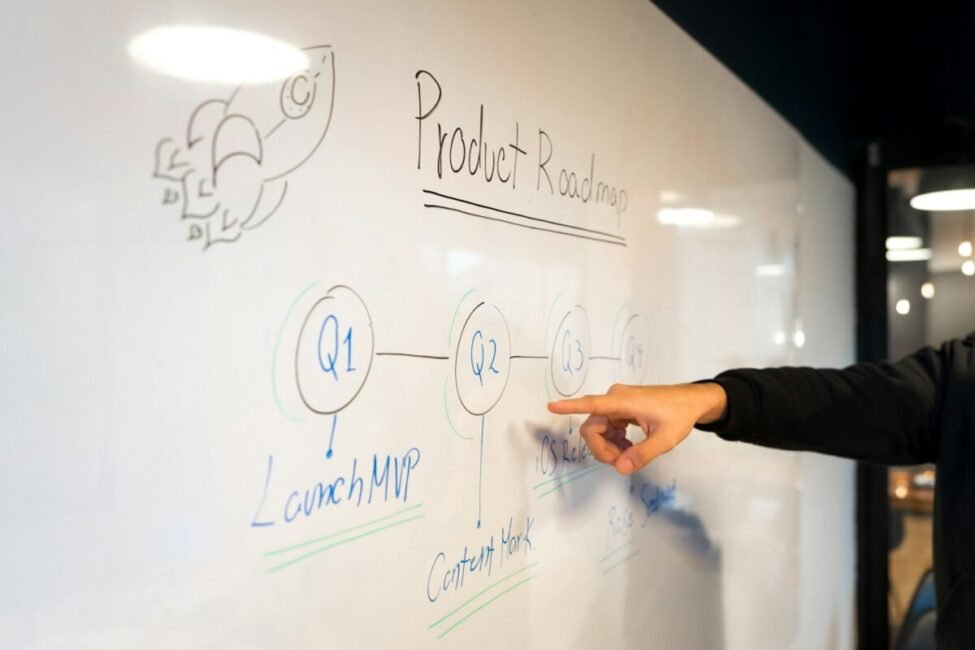
Quick answer: the best AI tools for product managers in 2026 are Dovetail and Maze for research synthesis, Productboard for feedback and roadmapping, ChatPRD and Notion AI for specs, Atlassian Intelligence or Linear for delivery, and Amplitude for product analytics. AI compresses synthesis and drafting; it does not help you prioritise, because prioritisation encodes strategy that is not in your data.
Table of Contents
Where does AI actually help a product manager?
Compared across the best ai tools for product managers, this is where the differences show. Product management is roughly four jobs — discovery, decision, definition and delivery — and AI is dramatically useful in two of them, mildly useful in one, and actively misleading in the fourth.
Discovery is where the biggest win sits: synthesising interviews, tickets, reviews and sales calls into themes. Definition is next: turning a decided direction into a spec, acceptance criteria and edge cases. Delivery gets modest gains from summarising status and drafting release notes. Decision — prioritisation — is where the tools overpromise, because the inputs that should drive it are not in the system.

Which are the best AI tools for product managers in 2026?
How we compare: the best AI tools for product managers are grouped here by the job they do rather than by category label, judged on whether they work from your real product data, and checked for whether customer data can be excluded from model training. Pricing is seat-based almost everywhere in this category; verify current tiers on the vendor page.
| Tool | Job it does | Works from | Best for |
|---|---|---|---|
| Dovetail | Research repository and synthesis | Interviews, transcripts, notes | Teams doing continuous discovery |
| Maze | Testing and research at speed | Prototypes, surveys, sessions | Validating before building |
| Productboard | Feedback aggregation and roadmap | Tickets, sales notes, requests | Connecting demand to roadmap |
| ChatPRD | Drafting specs and PRDs | Your brief and context | PMs who write a lot of specs |
| Atlassian Intelligence | Delivery, summarising, search | Jira and Confluence data | Teams already on Atlassian |
| Amplitude | Product analytics with AI querying | Behavioural event data | Understanding what users actually do |
Dovetail and Maze — the discovery layer
Anyone shortlisting the best ai tools for product managers runs into this first. This is where AI earns its place unambiguously. Twenty interview transcripts used to mean days of tagging; synthesis tools now cluster themes and pull supporting quotes in an afternoon. Treat the output as a first pass rather than a finding — models over-weight repetition, and the loudest theme is not automatically the most important one. The Nielsen Norman Group publishes useful research on where automated analysis helps and where it flattens nuance.
Productboard — demand in one place
This is the dividing line between the best ai tools for product managers. Its value is aggregation: feature requests arrive through sales, support, community and executives, and Productboard puts them in one system with AI clustering duplicates. Note carefully what this produces — a ranked list of request volume. That is an input to prioritisation, not prioritisation itself.
ChatPRD, Notion AI and general assistants — definition
It matters most when weighing the best ai tools for product managers. For writing specs, a general model with a good brief usually matches a specialist tool. What changes the output is not the product but the prompt: state the problem, the constraint, the user, and what success looks like, and you get a usable draft. Our guide to prompt engineering techniques covers the parts that transfer directly to spec writing.
Atlassian Intelligence and Linear — delivery
Buyers comparing the best ai tools for product managers ask this early. Atlassian Intelligence summarises threads, drafts tickets and answers questions against your Jira and Confluence data. The gains are real but small — this is time back from status chasing rather than a change in how you work.


What do AI tools for product managers cost?
Less than the category’s reputation suggests at the delivery end, and by quote at the discovery end. Prices below were read from each vendor’s own pricing page on 6 October 2026; where a page did not load, that is said rather than filled in from a third-party tracker.
Delivery tools publish clean per-seat prices. Linear is free to start, $10 per user a month on Basic and $16 on Business, both billed yearly, with Enterprise quoted. The detail worth knowing is where the AI sits: the Linear Agent is included on the free tier, while Triage Intelligence — the feature that routes and labels incoming issues — starts at Business, and heavier agent work draws on AI credits on every plan.
Definition tools are the cheapest line. Notion is $10 per user a month on Plus and $20 on Business, and the split matters: Plus carries only a trial of Notion AI, while Business includes the AI features, the Notion Agent and AI meeting notes outright. For drafting specs with a general assistant, Claude Pro is $20 a month, or $17 billed annually, and includes Opus rather than reserving it for the $100 tier.
Discovery and demand tools are where the quote starts. Productboard and Dovetail both tier by makers or contributors rather than total headcount, and neither pricing page responded when we checked, so we are not quoting a figure for either. Ask both the same question before a demo: who counts as a paid seat. A research repository that charges for every stakeholder who reads an insight costs several times one that charges only for the people who create them.
A realistic stack for a five-person product team is Linear Business at $80 a month, Notion Business at $100, and two Claude Pro seats at $40 — $220 a month before any discovery tool. That is the number to hold a discovery quote against, because the research platform is frequently the largest line on the invoice and the one used by the fewest people.
Why does AI struggle with prioritisation?
Across the best ai tools for product managers, the pattern is consistent. Because prioritisation is not a data problem. It is a strategy problem wearing a data costume.
A model ranking your backlog can see request counts, revenue attached to accounts, and effort estimates. It cannot see that you are deliberately underserving a segment, that a low-volume request comes from the customer you are building a case study around, or that a feature everyone wants would commit you to a market you are exiting. Those facts are the actual inputs to prioritisation, and none of them are in the ticket system.
- Use AI to quantify demand — cluster duplicates, attach revenue, size effort. This part is genuinely useful.
- Make the trade-off yourself, in writing, with the strategy stated. If you cannot articulate why, no model will supply it.
- Beware the confident ranked list. A scored backlog looks like an answer and is usually a popularity contest.
- Keep the “will not build” list. AI will never generate it, and it is the most valuable artefact a PM owns.
What should you check before feeding it customer data?
The best ai tools for product managers vary more here than anywhere else. Product managers handle more personal data than they usually realise — interview recordings, support transcripts, behavioural events tied to identifiable accounts. The diligence is short and worth doing once.
- Confirm the lawful basis and consent. The ICO’s guidance on AI and data protection is the clearest free reference for UK and EU obligations.
- Turn off training on your inputs. Business tiers usually offer this; consumer tiers usually do not.
- Anonymise before synthesis where you can. Themes rarely need names attached.
- Check where recordings are stored and for how long, especially if participants were promised deletion.
For adjacent analysis work, see our comparisons of AI agents for data analysis and AI tools for business analysts. If your role includes go-to-market, AI tools for marketers covers that layer, and AI presentation makers handles the stakeholder deck.
Frequently Asked Questions
What are the best AI tools for product managers?
Judged as the best ai tools for product managers, the ranking shifts. For the best ai tools for product managers, the honest answer depends on scale. By job rather than by brand: Dovetail and Maze for research synthesis, Productboard for feedback and roadmap, ChatPRD and Notion AI for specs, Atlassian Intelligence and Linear for delivery, and Amplitude for product analytics. Most PMs get more from a general assistant plus one specialist tool than from a dedicated PM AI suite.
Can AI write a PRD or product spec?
Every one of the best ai tools for product managers claims this. It can write a competent draft from a clear brief, and it cannot decide what belongs in it. Given the problem statement, constraints and success metric, a general model will produce structure, acceptance criteria and edge cases faster than you will. Given a vague prompt, it produces plausible filler that reads like a spec and commits you to nothing.
Does AI help with prioritisation?
Reviewing the best ai tools for product managers side by side makes it obvious. Less than vendors imply. Prioritisation encodes strategy — which customers matter, which bets you are willing to lose, what you will not build. That information lives outside your ticket data, so a model scoring your backlog is really scoring request volume. Use AI to cluster and quantify demand, then prioritise yourself.
How does AI change user research for product teams?
Not all the best ai tools for product managers handle this equally well. Synthesis is the step that collapses. Transcribing twenty interviews, tagging themes and pulling supporting quotes used to take days and now takes an afternoon with tools like Dovetail. The interviews themselves still need a human, and so does the judgment about which theme is a signal rather than a loud minority.
Is it safe to put customer interviews into an AI tool?
Only with the same care you would apply to any personal data. Recordings and transcripts usually contain identifiable information, so you need a lawful basis, participant consent that covers processing, and a vendor that will not train on your inputs. Check the training toggle and the data processing agreement before the first upload, not after.
Do product managers need to learn prompt engineering?
They need the part that overlaps with writing a good brief, which most PMs already have. Supplying context, constraints, an audience and a success criterion is the same skill that makes a spec usable by engineers. The exotic techniques matter far less than the discipline of stating what you actually want.
Will AI replace product managers?
It removes production work — summarising, drafting, formatting, chasing status — and leaves the decisions. The scarce resource in product management has never been documents; it is judgment about what to build and the credibility to say no. AI increases the volume of options and does nothing to help you choose between them.
Conclusion
The honest summary of AI for product managers is that it is excellent at synthesis, competent at drafting, and unreliable at judgment — which happens to be the exact order of how much of your week those activities consume, so the gains are real.
Buy for discovery first. Research synthesis is the one place where the time saving is large, immediate and low-risk. Add a spec assistant if you write a lot of them, and treat delivery AI as a small convenience rather than a purchase decision. Resist any tool that offers to prioritise your roadmap — what it can actually do is rank request volume, and confusing that with strategy is how products end up as a list of everything anyone asked for.
